
Машина для прессования гидравлического масла
Гидравлические масляные прессы, предлагаемые к продаже в Гуйгоне, предназначены для зарубежных покупателей, планирующих добычу масла механическим способом партиями определённого объёма. Сырьё загружается в прессовальную камеру, сжимается с помощью гидравлического привода и извлекается в виде жмыха после выполнения утверждённой последовательности действий по сбросу давления.
Гидравлический маслопресс оказывает давление на подготовленное маслосодержащее сырье с помощью прессовального механизма с гидравлическим приводом. Обычное оборудование работает по этапам: загрузка, прессование и разгрузка, поэтому организация работы по партиям играет важную роль при выборе оборудования.
Правильная конфигурация зависит от условий подачи материала, полезной грузоподъёмности, продолжительности полного цикла и практического метода обработки. Мы совместно обсуждаем эти требования, чтобы предложение по оборудованию точно соответствовало тому, как ваша команда будет организовывать производство.
Отправьте нам подготовленные материалы, предполагаемый размер партии и суточную производительность, чтобы запросить информацию об оборудовании для гидравлического прессования масла.
Запрос — наша лучшая цена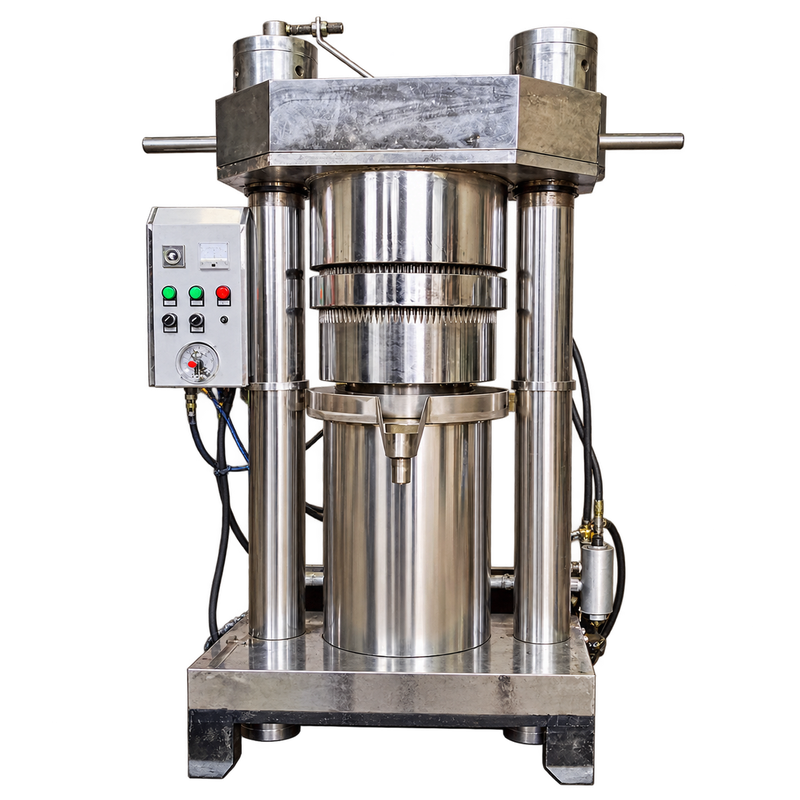
Технические характеристики гидравлического пресса для масла
| Технический указатель | 6YY-150 | 6YY-180 | 6YY-230 | 6YY-260 | 6YY-320 | 6YY-360 | 6YY-415 | 6YY-460 |
|---|---|---|---|---|---|---|---|---|
| Габаритные размеры (Д × Ш × В), мм | 700×800×780 | 800×900×1050 | 900×1000×1400 | 1050×1100×1550 | 1120×1200×1650 | 1200×1200×1680 | 1250×1250×1700 | 1450×1450×1950 |
| Вес машины (кг) | 240 | 550 | 950 | 1200 | 1700 | 2000 | 2200 | 3000 |
| Максимальное рабочее давление (МПа) | 55–60 | 55–60 | 55–60 | 55–60 | 55–60 | 55–60 | 55–60 | 55–60 |
| Мощность нагрева (Вт) | 600 | 720 | 850 | 950 | 1100 | 1250 | 1500 | 2000 |
| Температура нагрева (°C) | 50–70 | 50–70 | 50–70 | 50–70 | 50–70 | 50–70 | 50–70 | 50–70 |
| Вместимость бункера (кг) | 2 | 4 | 8 | 12 | 17.5 | 22.5 | 30 | 50 |
| Диаметр масличного жмыха (мм) | 154 | 192 | 242 | 270 | 323 | 370 | 415 | 460 |
| Производительность в час (кг/ч) | 8–12 | 16–20 | 32–40 | 44–55 | 60–70 | 80–90 | 90–120 | 150–200 |
| Мощность двигателя (кВт) | 0.75 | 1.5 | 1.5 | 1.5 | 2.2 | 2.2 | 2.2 | 2.2 |
Технические характеристики приведены в соответствии с прилагаемым листом технических параметров. Окончательную конфигурацию модели, расчетную мощность и условия эксплуатации следует уточнить в коммерческом предложении. Не следует считать, что почасовая производительность соответствует объему добываемой нефти.
Как работает гидравлический маслопресс
Подготовленный материал помещается в прессовальную камеру. Гидравлическая система станка приводит в действие прессовальный механизм, который сжимает материал, позволяя маслу вытекать через предусмотренную дренажную систему.
После завершения этапа прессования давление сбрасывается в соответствии с технологической инструкцией, а оставшийся осадок удаляется перед загрузкой следующей партии.
Стандартный цикл периодического производства включает:
- Подготовка и дозирование исходного сырья.
- Загрузка прессовой камеры.
- Расположение всех необходимых деталей для прессования.
- Осуществление давления в соответствии с эксплуатационной инструкцией.
- Завершение этапа прессования.
- Безопасный сброс давления.
- Извлечение выпечки и подготовка камеры к следующей партии.
Фактическая последовательность действий зависит от конструкции станка. Операторы должны следовать инструкциям, прилагаемым к выбранной модели.
Выберите оборудование для гидравлического прессования масла для всей партии
Серийный пресс должен обеспечивать как сам процесс прессования, так и работу между циклами прессования. Загрузка, установка необходимых компонентов, сброс давления и извлечение прессованного материала — все это влияет на практическую организацию производства.
При выборе гидравлического пресса для отжима масла следует учитывать повторяющиеся операции, которые будут выполнять ваши операторы. Размер камеры должен соответствовать удобному способу загрузки, обеспечивать удобство извлечения жмыха и позволять заготовить достаточное количество сырья для следующего цикла.
В ходе обсуждений, посвящённых нашему оборудованию, основное внимание уделяется следующим вопросам:
- Соответствие требованиям к корму, предназначенному для данного целевого использования.
- Грузоподъёмность, указанная с чётким указанием материала.
- Исходите из предположений о полном цикле, а не ориентируйтесь исключительно на сроки.
- Расположение камер и доступ для обслуживания.
- Гидравлические органы управления, рабочие пределы и доступ для технического обслуживания.
Сравнение технических характеристик гидравлических масляных прессов
Попросите предоставить технические характеристики, в которых будет объяснено, как предлагаемое оборудование справляется с вашим сырьем и соответствует вашему плану работы.
| Пункт спецификации | Что должно быть ясно | Почему это важно |
|---|---|---|
| Полезный грузоподъёмность | Материал и условия подготовки, лежащие в основе оценки партии | Обеспечивает значительную пропускную способность канала передачи данных |
| Pressing chamber | Dimensions and approved loading arrangement | Defines how the material is accommodated |
| Cycle information | What is included in the stated time | Supports realistic shift planning |
| Hydraulic system | Rated pressure, controls and protective arrangements | Defines the approved operating envelope |
| Pressing force information | Meaning and basis of the quoted rating | Avoids confusing force with hydraulic pressure |
| Power requirements | Voltage, frequency, phase and motor specification | Supports destination compatibility checks |
| Unloading arrangement | Cake removal method and required access | Helps assess operator workload |
| Service requirements | Fluid specification, service items and access | Supports maintenance planning |
Model-specific values should be supplied with the proposed equipment offer. A generic maximum pressure or chamber size cannot establish the performance of an unspecified machine.
Our Export Approach for Hydraulic Oil Press Buyers
Our company’s role is to connect the equipment purchase with the requirements of the overseas production site.
Batch Requirements Before Equipment Selection
We begin with the intended material, prepared feed condition, expected batch size and daily production schedule.
This helps establish whether the proposed equipment and handling method fit the project.
Specifications That Support Production Planning
An equipment discussion should distinguish chamber loading capacity from hourly throughput and oil output.
Buyers should also understand which accessories are needed for loading, pressing and unloading, and whether those items are included.
Destination Details Clarified Early
Electrical supply, required documentation and market-specific requirements should be discussed before order confirmation.
Any certification claim or electrical adaptation must be confirmed for the particular machine offered.
A Defined Delivery and Support Scope
Packing information and unloading requirements help the destination team prepare for arrival.
The quotation and purchasing documents should also identify the agreed operating documentation, spare parts, warranty and technical support arrangements. Clear responsibilities make overseas purchasing easier to manage.
Request a Hydraulic Oil Press Machine Price
Hydraulic oil press pricing depends on the offered chamber configuration, loading capacity basis, hydraulic components, controls and supplied accessories. Packing and delivery terms also affect the scope of the quotation.
Send your material, desired batch loading, daily feed target, operating hours, power supply and destination. If you are still comparing pressing technologies, visit our oil press machine product overview.
FAQs About Hydraulic Oil Press Equipment
1. What defines a hydraulic oil press machine?
A hydraulic oil press applies compression through a hydraulically driven mechanism to material loaded in a pressing chamber. Conventional designs operate in batches. The equipment category does not establish a universal loading capacity or pressing cycle, so the actual chamber arrangement, controls and material suitability must be assessed for the offered model.
2. Which materials are suitable for hydraulic oil pressing?
Hydraulic pressing may be suitable for sesame and certain prepared seeds, nuts or kernels, depending on the machine and process. Suitability should be checked for the material’s physical form, moisture and preparation condition. A list of potential applications does not guarantee that every material can be processed without adjustment.
3. Is every hydraulic oil press a cold press machine?
No. Cold pressing describes process conditions rather than the hydraulic mechanism alone. Heated or roasted feed introduces temperature before pressing, and the finished oil must meet the criteria applicable to its intended description. Confirm the preparation method, operating procedure and measured temperatures before making a cold-pressed product claim.
4. Can a hydraulic oil press process roasted sesame?
Some hydraulic press configurations are intended for prepared sesame, including roasted material. Compatibility must be confirmed for the selected model and operating procedure. Roasting conditions can affect the resulting oil characteristics. Buyers should specify the feed condition and desired product, then assess a representative trial where practical.
5. What should be recorded during a hydraulic pressing trial?
Record material identity, preparation condition, batch weight, loading arrangement, relevant settings and complete cycle time. Measure collected oil using a defined method and note whether it is filtered. Include temperatures where relevant. Repeating comparable batches provides more useful evidence of consistency than demonstrating oil extraction from one batch.
6. How many operators does a hydraulic oil press require?
Staffing depends on machine design, handling methods, batch size and the number of presses operated together. Loading and cake removal may require more attention than the pressing stage. Evaluate the complete work sequence and physical handling requirements. Operator numbers should be confirmed for the proposed setup rather than assumed universally.
7. Can hydraulic fluid contaminate the extracted oil?
Hydraulic fluid belongs to the machine’s power system and must remain separate from the product. Leaks, damaged components or unsuitable handling can create contamination risks. Inspect the equipment, maintain appropriate separation and follow cleaning procedures. If contamination is suspected, stop production and investigate before releasing the affected product.
8. Can one hydraulic press handle several materials in separate batches?
Potentially, if the selected machine is suitable for each material. Preparation, loading and pressing procedures may differ, and cleaning between materials requires planning. Where allergens or product identity matter, verify the changeover procedure. Batch operation makes production runs distinct, but it does not automatically eliminate retained material or cross-contact.
Request a Hydraulic Oil Press Quotation
Send your prepared material, desired batch loading, daily feed target, operating hours, power supply and destination.