
Hydraulic Oil Press Machine
Hydraulic oil press machines for sale in Guigong are offered for overseas buyers planning mechanical oil extraction in measured batches. Material is loaded into a pressing chamber, compressed through a hydraulically driven mechanism and removed as cake after the approved pressure release sequence.
A hydraulic oil press machine applies force to prepared oil-bearing material through a hydraulically driven pressing mechanism. Conventional equipment operates through separate loading, pressing and unloading stages, making batch organization an important part of equipment selection.
The right configuration depends on the feed condition, usable loading weight, complete cycle time and practical handling method. We discuss these requirements together so the equipment offer reflects how your team will run production.
Send your prepared material, target batch size and daily workload to request hydraulic oil press equipment information.
Inquiry Our Best Price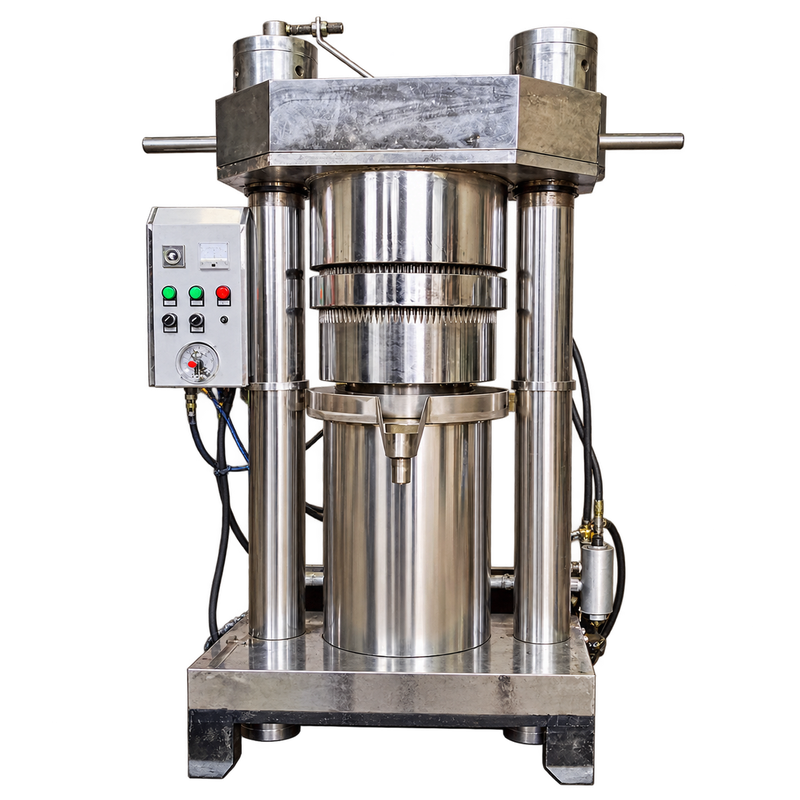
Hydraulic Oil Press Machine Specifications
| Technical Index | 6YY-150 | 6YY-180 | 6YY-230 | 6YY-260 | 6YY-320 | 6YY-360 | 6YY-415 | 6YY-460 |
|---|---|---|---|---|---|---|---|---|
| Overall Dimensions (L × W × H), mm | 700×800×780 | 800×900×1050 | 900×1000×1400 | 1050×1100×1550 | 1120×1200×1650 | 1200×1200×1680 | 1250×1250×1700 | 1450×1450×1950 |
| Machine Weight (kg) | 240 | 550 | 950 | 1200 | 1700 | 2000 | 2200 | 3000 |
| Max. Working Pressure (MPa) | 55–60 | 55–60 | 55–60 | 55–60 | 55–60 | 55–60 | 55–60 | 55–60 |
| Heating Power (W) | 600 | 720 | 850 | 950 | 1100 | 1250 | 1500 | 2000 |
| Heating Temperature (°C) | 50–70 | 50–70 | 50–70 | 50–70 | 50–70 | 50–70 | 50–70 | 50–70 |
| Hopper Capacity (kg) | 2 | 4 | 8 | 12 | 17.5 | 22.5 | 30 | 50 |
| Oil Cake Diameter (mm) | 154 | 192 | 242 | 270 | 323 | 370 | 415 | 460 |
| Hourly Output (kg/h) | 8–12 | 16–20 | 32–40 | 44–55 | 60–70 | 80–90 | 90–120 | 150–200 |
| Motor Power (kW) | 0.75 | 1.5 | 1.5 | 1.5 | 2.2 | 2.2 | 2.2 | 2.2 |
Specifications are reproduced from the supplied parameter sheet. Confirm the final model configuration, capacity basis and operating conditions in the quotation. Hourly output should not be assumed to mean extracted oil output.
How a Hydraulic Oil Press Machine Works
Prepared material is placed in a pressing chamber. The machine’s hydraulic system drives a pressing mechanism that compresses the material, allowing oil to escape through the designed drainage arrangement.
After the pressing stage, pressure is released according to the operating procedure, and the remaining cake is removed before another batch is loaded.
A conventional batch cycle includes:
- Preparing and measuring the feed material.
- Loading the pressing chamber.
- Positioning any required pressing components.
- Applying pressure according to the operating procedure.
- Completing the pressing stage.
- Releasing pressure safely.
- Removing cake and preparing the chamber for the next batch.
The actual sequence depends on the machine design. Operators must follow the instructions supplied for the selected model.
Select Hydraulic Oil Press Equipment Around the Complete Batch
A batch press must fit both the pressing stage and the work between pressing cycles. Loading, positioning any required components, releasing pressure and removing cake all affect practical production.
When selecting a hydraulic oil press machine, consider the repeated tasks your operators will perform. A suitable chamber size needs to be matched with a usable loading method, manageable cake removal and enough prepared material for the next run.
Our equipment discussions focus on:
- Suitability for the intended prepared feed.
- Loading capacity expressed on a clearly stated material basis.
- Complete cycle assumptions rather than pressing time alone.
- Chamber arrangement and handling access.
- Hydraulic controls, operating limits and maintenance access.
Compare Hydraulic Oil Press Specifications
Ask for specifications that explain how the proposed machine handles your material and operating plan.
| Specification item | What needs to be clear | Why it matters |
|---|---|---|
| Usable loading weight | Material and preparation condition behind the batch rating | Establishes a meaningful feed capacity |
| Pressing chamber | Dimensions and approved loading arrangement | Defines how the material is accommodated |
| Cycle information | What is included in the stated time | Supports realistic shift planning |
| Hydraulic system | Rated pressure, controls and protective arrangements | Defines the approved operating envelope |
| Pressing force information | Meaning and basis of the quoted rating | Avoids confusing force with hydraulic pressure |
| Power requirements | Voltage, frequency, phase and motor specification | Supports destination compatibility checks |
| Unloading arrangement | Cake removal method and required access | Helps assess operator workload |
| Service requirements | Fluid specification, service items and access | Supports maintenance planning |
Model-specific values should be supplied with the proposed equipment offer. A generic maximum pressure or chamber size cannot establish the performance of an unspecified machine.
Our Export Approach for Hydraulic Oil Press Buyers
Our company’s role is to connect the equipment purchase with the requirements of the overseas production site.
Batch Requirements Before Equipment Selection
We begin with the intended material, prepared feed condition, expected batch size and daily production schedule.
This helps establish whether the proposed equipment and handling method fit the project.
Specifications That Support Production Planning
An equipment discussion should distinguish chamber loading capacity from hourly throughput and oil output.
Buyers should also understand which accessories are needed for loading, pressing and unloading, and whether those items are included.
Destination Details Clarified Early
Electrical supply, required documentation and market-specific requirements should be discussed before order confirmation.
Any certification claim or electrical adaptation must be confirmed for the particular machine offered.
A Defined Delivery and Support Scope
Packing information and unloading requirements help the destination team prepare for arrival.
The quotation and purchasing documents should also identify the agreed operating documentation, spare parts, warranty and technical support arrangements. Clear responsibilities make overseas purchasing easier to manage.
Request a Hydraulic Oil Press Machine Price
Hydraulic oil press pricing depends on the offered chamber configuration, loading capacity basis, hydraulic components, controls and supplied accessories. Packing and delivery terms also affect the scope of the quotation.
Send your material, desired batch loading, daily feed target, operating hours, power supply and destination. If you are still comparing pressing technologies, visit our oil press machine product overview.
FAQs About Hydraulic Oil Press Equipment
1. What defines a hydraulic oil press machine?
A hydraulic oil press applies compression through a hydraulically driven mechanism to material loaded in a pressing chamber. Conventional designs operate in batches. The equipment category does not establish a universal loading capacity or pressing cycle, so the actual chamber arrangement, controls and material suitability must be assessed for the offered model.
2. Which materials are suitable for hydraulic oil pressing?
Hydraulic pressing may be suitable for sesame and certain prepared seeds, nuts or kernels, depending on the machine and process. Suitability should be checked for the material’s physical form, moisture and preparation condition. A list of potential applications does not guarantee that every material can be processed without adjustment.
3. Is every hydraulic oil press a cold press machine?
No. Cold pressing describes process conditions rather than the hydraulic mechanism alone. Heated or roasted feed introduces temperature before pressing, and the finished oil must meet the criteria applicable to its intended description. Confirm the preparation method, operating procedure and measured temperatures before making a cold-pressed product claim.
4. Can a hydraulic oil press process roasted sesame?
Some hydraulic press configurations are intended for prepared sesame, including roasted material. Compatibility must be confirmed for the selected model and operating procedure. Roasting conditions can affect the resulting oil characteristics. Buyers should specify the feed condition and desired product, then assess a representative trial where practical.
5. What should be recorded during a hydraulic pressing trial?
Record material identity, preparation condition, batch weight, loading arrangement, relevant settings and complete cycle time. Measure collected oil using a defined method and note whether it is filtered. Include temperatures where relevant. Repeating comparable batches provides more useful evidence of consistency than demonstrating oil extraction from one batch.
6. How many operators does a hydraulic oil press require?
Staffing depends on machine design, handling methods, batch size and the number of presses operated together. Loading and cake removal may require more attention than the pressing stage. Evaluate the complete work sequence and physical handling requirements. Operator numbers should be confirmed for the proposed setup rather than assumed universally.
7. Can hydraulic fluid contaminate the extracted oil?
Hydraulic fluid belongs to the machine’s power system and must remain separate from the product. Leaks, damaged components or unsuitable handling can create contamination risks. Inspect the equipment, maintain appropriate separation and follow cleaning procedures. If contamination is suspected, stop production and investigate before releasing the affected product.
8. Can one hydraulic press handle several materials in separate batches?
Potentially, if the selected machine is suitable for each material. Preparation, loading and pressing procedures may differ, and cleaning between materials requires planning. Where allergens or product identity matter, verify the changeover procedure. Batch operation makes production runs distinct, but it does not automatically eliminate retained material or cross-contact.
Request a Hydraulic Oil Press Quotation
Send your prepared material, desired batch loading, daily feed target, operating hours, power supply and destination.