
Would Like the Latest Price?
Leave more about your requirements, like models, quantities, countries, etc.
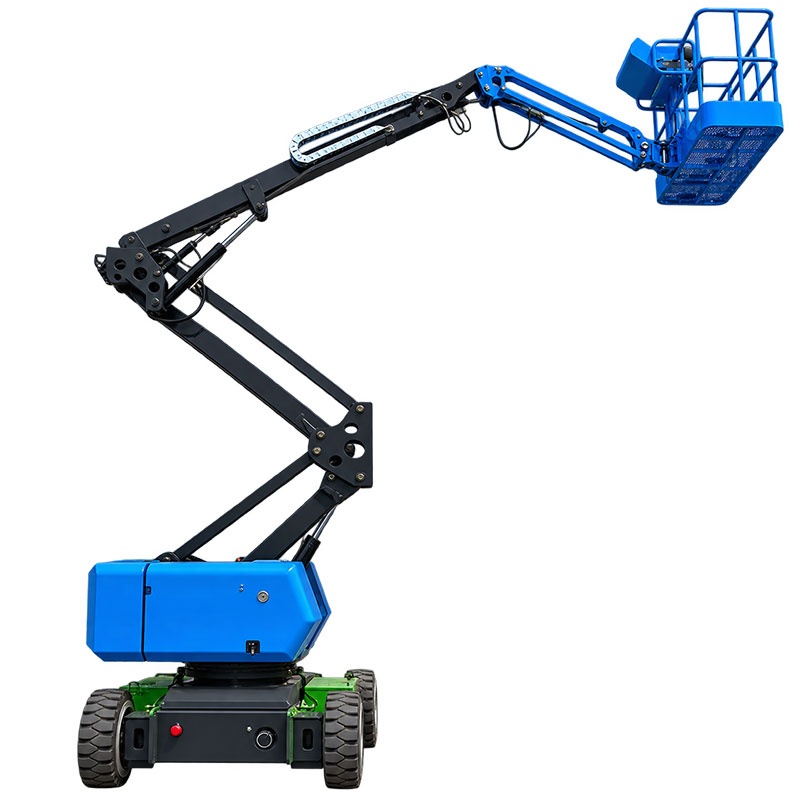
A 22m scissor lift is high-reach access equipment intended for major construction, industrial and structural projects where conventional compact platforms cannot provide sufficient elevation.
At this height, purchasing decisions are closely connected to site engineering. The buyer must consider not only the height of the platform but also machine stability, ground bearing capacity, access roads, transportation and emergency procedures. 22m scissor lift should therefore be treated as a project-specific machine rather than a general-purpose maintenance tool.
| Item | Specification |
| Maximum Working Height | 24 m |
| Maximum Platform Height | 22 m |
| Maximum Working Radius | 13.3 m |
| Maximum Up-and-Over Height | 9.95 m |
| Maximum Load Capacity | 230 kg |
| Drive Type | Wheel Hub Motor Drive |
| Battery Capacity | Lead-acid battery: 48 V / 480 Ah Lithium battery: 48 V / 500 Ah |
| Charger | 48 V / 60 A |
| Drive Motor | 34 VAC / 1.5 kW × 4 |
| Lift Motor | 5.5 kW / DC 48 V |
| Platform Size | 1.88 × 0.78 m |
| Overall Dimensions | 10.24 × 2.5 × 2.6 m |
| Platform Height from Ground When Stowed | -200 mm |
| Wheelbase | 2800 mm |
Leave more about your requirements, like models, quantities, countries, etc.
This height class is more likely to be purchased by large construction contractors, industrial maintenance companies, steel structure companies, infrastructure contractors and specialized rental businesses.
The 22m scissor lift machine usually represents a more substantial capital investment than compact electric equipment. Long-term spare parts support and technical assistance should therefore form part of the purchasing decision.
When personnel are elevated to substantial heights, the machine becomes part of the overall jobsite plan. The equipment may need dedicated access routes, controlled operating zones and prepared ground. Project managers should identify the intended operating locations before the machine arrives. This allows potential restrictions to be resolved in advance.
Typical projects can include large steel structures, industrial plants, building envelopes, infrastructure facilities and high-level mechanical installation.
Large high-reach machines can place substantial loads on the ground. Site managers should assess whether the operating area is capable of supporting the equipment. Potential concerns include underground utilities, trenches, drainage channels, soft soil, temporary slabs and recently backfilled areas.
A large scissor lift may need to travel significant distances across a project before reaching the working position. Temporary roads, ramps and access gates should therefore be checked for width, slope and load capability. A machine that cannot move efficiently through the site may require additional handling equipment. For international buyers, it is useful to request the complete transport and travel dimensions during the quotation stage.
High-reach outdoor machines generally require stronger travel systems than compact indoor equipment. Depending on the configuration, buyers may encounter four-wheel drive, off-road tires, high-torque drive systems and increased ground clearance. The appropriate combination depends on the terrain.
Large scissor lifts may operate for long periods during structural and industrial projects.
Diesel power can provide convenient refueling on outdoor jobsites. Battery-electric or hybrid configurations may be attractive where emissions restrictions apply.
When comparing power systems, buyers should consider the entire working day. Travel, lifting frequency, platform load and terrain can all influence energy consumption.
High-level contractors may need to bring substantial tools and materials to the work position. This makes rated platform capacity a central specification.
The buyer should estimate the maximum combined load realistically. That calculation may include several workers, power tools, installation equipment and construction materials.
The platform should never be treated as an unrestricted material lift. All loading must remain within the manufacturer’s operating limits.
Emergency planning becomes increasingly important as working height increases. Jobsites should have procedures for lowering the platform if normal controls become unavailable.
Ground personnel should understand the emergency lowering system. The machine’s emergency procedures should be incorporated into the contractor’s overall work-at-height plan.
Large machines require disciplined operation. Operators should understand the specific controls, warning systems and machine limitations of the equipment they are using. Site supervisors should also control access around the operating area.
Leave more about your requirements, like models, quantities, countries, etc.
Large machines may require specialized transport depending on dimensions, weight and local transport regulations. Confirm the exact transport configuration before ordering.
This depends entirely on the machine’s transport dimensions. Some large models may require alternative shipping methods, so container feasibility should be confirmed before purchase.
No. Diesel can be practical for outdoor work, but electric and hybrid configurations may be preferable for projects with emissions or noise restrictions.
For international projects, keeping selected critical spare parts can reduce downtime. The recommended parts package should be based on the exact machine configuration and expected utilization.
Provide the project location, site surface, required capacity, power preference, expected working conditions, quantity and transportation destination. This helps the supplier evaluate whether the selected machine is appropriate.
A broad platform can support workers who need to perform installation activities across a larger section of the structure. This can be valuable for cladding, steelwork, piping or industrial installation. However, larger platform dimensions also influence machine weight and transport size.
For high-reach equipment, technical documentation deserves close review. A supplier should be able to provide clear data on machine dimensions, platform capacity, drive system, power configuration, operating limits, transport requirements and safety systems. Buyers should also evaluate after-sales support.