

Would Like the Latest Price?
Leave more about your requirements, like models, quantities, countries, etc.
Freeze dryer, also known as vacuum freeze dryer, lyophilization equipment, is a precision automated dehydration device that integrates low-temperature refrigeration, vacuum technology, heat transfer, and intelligent control, based on the three-phase physical properties of water. It utilizes low-temperature vacuum sublimation dehydration technology, eliminating high temperatures and liquid water evaporation throughout the process, thus completely avoiding problems such as material deterioration, nutrient loss, structural collapse, and dulling of color caused by traditional drying methods. Freeze dryers for sale in our compamy are widely used in medical, biological research, food processing, cosmetics and skincare, cultural relic restoration, agricultural breeding, new material research and development, becoming a benchmark equipment in the high-end drying and processing industry.
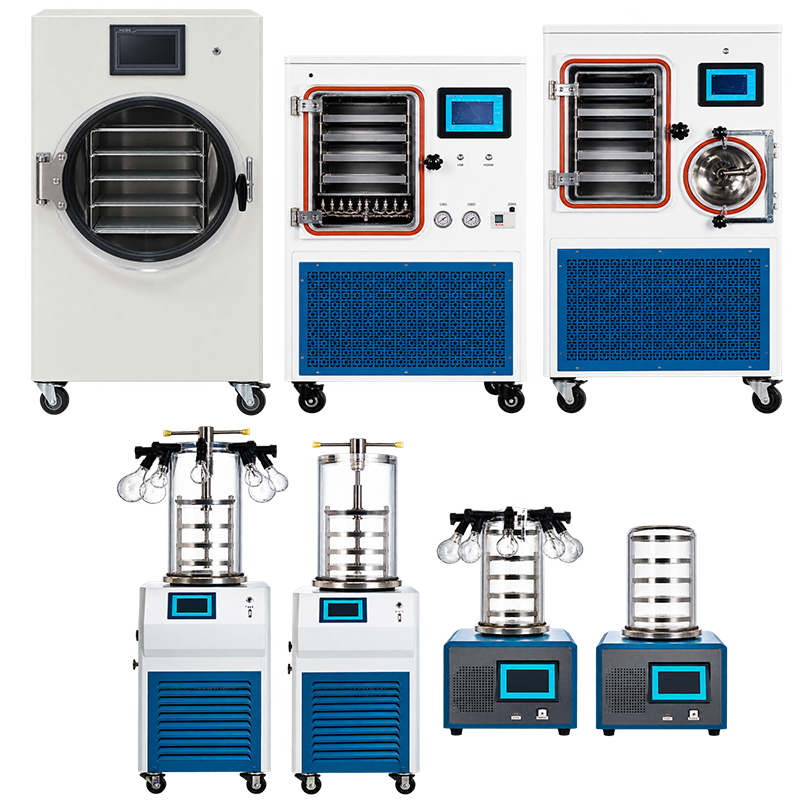
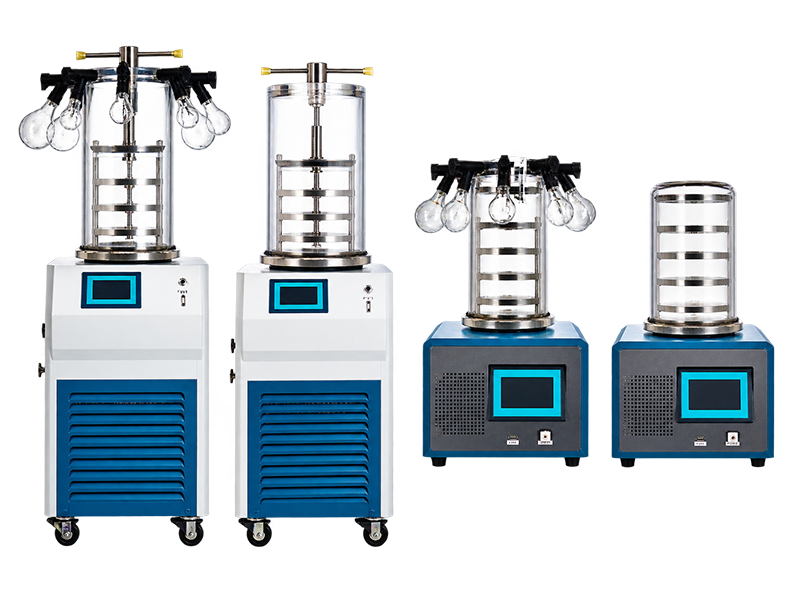
Laboratory freeze dryers are small, precision devices, characterized by their compact size, high accuracy, and wide range of adjustable parameters. Primarily suitable for university laboratories, research institutions, and pharmaceutical R&D departments for sample testing, formula debugging, and pilot production. It can process materials such as bacterial strains, serum, reagents, and trace amounts of fruit and vegetable samples.
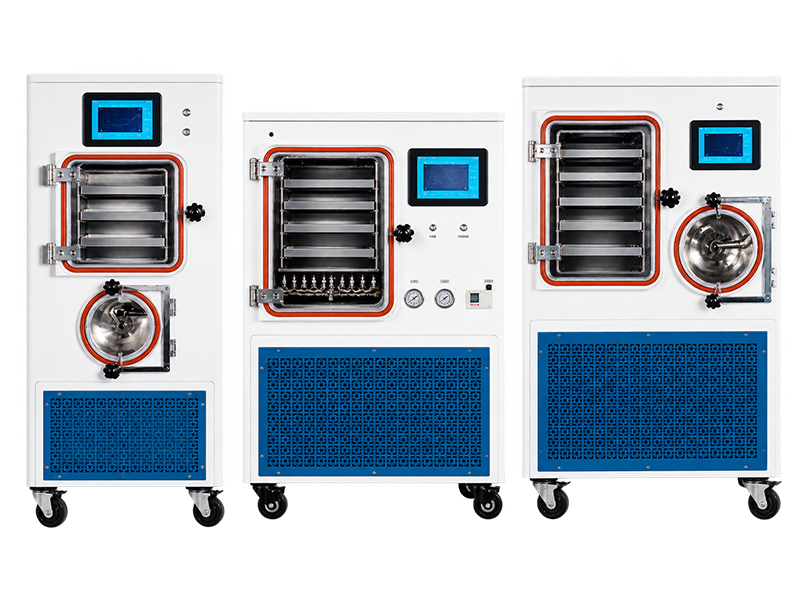
A medium to large-scale production machine with high capacity and automation, designed specifically for the food processing industry. Suitable for freeze-drying fruits, vegetables, meat, seafood, tea, health products, and other ingredients.
A high-standard aseptic machine, conforming to GMP cleanroom standards, with extremely high sealing, cleanliness, and stability, eliminating any unsanitary areas. Primarily used for drying pharmaceutical materials such as vaccines, antibiotics, biological agents, plasma products, and traditional Chinese medicine decoction pieces.
An ultra-large capacity automated machine suitable for large-scale industrial production. Widely used in deep processing of agricultural products, freeze-drying of new materials, and dehydration of industrial raw materials, enabling 24-hour continuous automated operation.
Smallest size, highly portable, mostly used for micro-sample processing in laboratories. Simple operation, small footprint, low energy consumption, suitable for small-scale research scenarios.
Vertical structure, larger chamber capacity, better cooling effect, suitable for both small-scale and pilot-scale production. Suitable for small and medium-sized research institutions and small processing plants.
Large, integrated equipment with spacious chambers, allowing for batch material placement, high degree of automation. Mostly used for mass production processing in the food and pharmaceutical industries.
Automated production line equipment, enabling fully automatic continuous operation of feeding, freeze drying, and discharging. Suitable for large-scale industrial mass production enterprises, with extremely high capacity.
Conventional sublimation drying mode, suitable for most common materials, high cost-effectiveness, and strong versatility.
The equipment comes with a capping function, automatically caps and seals materials after drying, preventing secondary contamination. Mainly used for processing pharmaceutical products such as vials, oral liquids, and sterile reagents.
Features a vacuum preheating function, which can optimize the drying process for special high-viscosity and high-sugar materials, solving the problems of uneven and incomplete freeze-drying.
Leave more about your requirements, like models, quantities, countries, etc.
The entire drying process is conducted at temperatures below 60℃, with the core sublimation stage at sub-zero temperatures. This ensures the complete preservation of the bioactivity, vitamins, amino acids, enzyme activity, and other core components of heat-sensitive materials. Freeze dryers are suitable for processing probiotics, traditional medicine, biological agents, and high-end fruits and vegetables, completely solving the problems of nutrient loss and activity degradation caused by high-temperature drying.
The entire drying process is conducted in a high-vacuum, sealed environment. The oxygen content inside the chamber is extremely low, effectively preventing oxidation, browning, and deterioration of materials upon contact with oxygen. Simultaneously, it inhibits the growth of bacteria and microorganisms, ensuring material quality without the need for preservatives and significantly improving the safety and shelf life of the finished product.
Materials are first frozen and shaped before dehydration and drying. After drying, the original shape, color, and texture of the material are completely preserved, avoiding problems such as shrinkage, collapse, cracking, and hardening that often occur after drying. The dried product has a full appearance, light texture, and excellent rehydration properties, quickly returning to its fresh state after immersion in water.
Our freeze dryers are equipped with an intelligent PLC control system, allowing for customized settings of pre-freezing temperature, vacuum degree, drying time, and temperature rise curve based on the eutectic point, moisture content, and characteristic parameters of different materials. This allows for precise matching of drying processes for different materials in food, pharmaceuticals, and scientific research.
Leave more about your requirements, like models, quantities, countries, etc.
The food industry is the most widespread application field for freeze dryers, mainly used for processing high-end snack foods, functional foods, and meal replacement foods. Common products include freeze-dried dried fruits, freeze-dried vegetables, freeze-dried meats, freeze-dried yogurt blocks, freeze-dried bird’s nest, freeze-dried tea powder, instant coffee, and infant complementary foods. Freeze-drying technology can also be used for processing dehydrated ingredients and pre-prepared food ingredients, significantly extending the shelf life of ingredients and reducing food loss.
The biopharmaceutical industry is the origin of freeze-drying technology, with extremely high requirements for equipment precision and sterility. Pharmaceutical freeze dryers are mainly used for drying and preserving materials such as vaccines, antibiotics, interferon, enzyme preparations, probiotics, serum, plasma, biological strains, and high-quality Chinese medicinal herbs. Freeze-drying in a low-temperature vacuum environment can fully preserve the biological activity of samples, ensuring the efficacy and safety of pharmaceuticals and reagents.
In universities, research institutes, and new materials companies, freeze dryers are used for drying various experimental samples, including microbial strain preservation, plant specimen preparation, cell and tissue dehydration, and low-temperature drying of nanomaterials, ceramic materials, and polymer materials. Freeze dryers avoid sample structure damage and component loss, ensuring accurate and reliable experimental data, making them indispensable precision equipment for scientific research.
Freeze dryers are also widely used in cultural relic restoration, permanent preservation of animal and plant specimens, agricultural breeding, and cosmetic and skincare raw material processing. In cultural relic restoration, damp paper and textile artifacts can be freeze-dried at low temperatures without damaging their texture and material. In agriculture, they are used for seed freeze-drying to preserve seed germination activity. In the cosmetics industry, they are used for freeze-dried masks, freeze-dried serums, and plant extract processing to preserve skincare active ingredients.
Leave more about your requirements, like models, quantities, countries, etc.
The core differences between freeze dryers and regular dryers lie in their drying principles, operating environment, and finished product quality. Freeze dryers are primarily suitable for processing high-end materials, while dryers are only suitable for dehydrating ordinary, low-value-added materials. Conventional dryers rely on high-temperature hot air circulation to dehydrate materials through liquid water evaporation, with operating temperatures generally exceeding 60℃. High temperatures directly destroy vitamins, active enzymes, and bioactive substances in the materials, and also easily lead to shrinkage, collapse, yellowing, and significant nutrient loss. The finished product has a short shelf life and is only suitable for processing ordinary dried goods. Freeze dryers utilize the principle of low-temperature vacuum sublimation, operating at low temperatures throughout the process without high-temperature baking or liquid water evaporation, thus preserving the original form, nutrients, and activity of the materials to the greatest extent. The finished product is loose and porous with excellent rehydration properties, and can be stored at room temperature for 1-3 years. Furthermore, the freeze-drying process is entirely sterile and oxygen-free, preventing oxidation, spoilage, and bacterial growth, resulting in a finished product with significantly higher safety and added value than dried products.
The core reason for the ultra-long shelf life of freeze-dried materials is the dual protection of deep dehydration and a sterile, oxygen-free processing environment.
First, freeze dryers, through three processes—pre-freezing, sublimation drying, and desorption drying—can reduce the moisture content of materials to 1%-5%, leaving almost no free water inside. This inhibits microbial activity at the source, preventing mold and spoilage.
Second, the entire freeze-drying process is completed in a high-vacuum, sealed chamber with extremely low oxygen content, effectively preventing oxidation, browning, component deterioration, and quality degradation. Simultaneously, the low-temperature vacuum environment does not produce harmful substances, eliminating the need for preservatives or other additives, ensuring the material’s inherent quality stability.
Finally, freeze-dried materials have a stable structure and, when sealed, are isolated from external moisture, bacteria, and oxygen. They can be stably stored at room temperature for 1-3 years, far exceeding the shelf life of materials dried or sun-dried.
Not all materials are suitable for freeze-drying. Freeze dryers are primarily suitable for materials with high moisture content, heat sensitivity, and high added value. Some special materials cannot be dried using freeze-drying processes. Materials suitable for freeze drying include various fruits and vegetables, meats, aquatic products, probiotics, biological agents, vaccines, traditional Chinese medicine, microbial strains, plant specimens, and skincare raw materials. Materials unsuitable for freeze drying mainly include anhydrous hard materials, high-oil, low-moisture materials, and highly volatile, non-fixed-form chemical volatile materials. In addition, some materials with extremely high sugar content and extremely low eutectic points require specific process parameters to be adjusted for freeze drying; otherwise, incomplete drying and collapse may occur.
The operating cycle of a freeze dryer is not fixed and depends mainly on the type of material, material thickness, loading capacity, moisture content, and equipment model parameters. The larger the loading capacity, the thicker the material, and the higher the moisture content, the longer the freeze-drying cycle. Equipment temperature and vacuum parameters will also slightly affect the operating time. The overall range is 4-24 hours.
For small-scale laboratory samples, such as microbial strains, reagents, and thin-sectioned plant samples, the operating cycle is shorter, and the entire process can be completed in 4-8 hours.
For conventional food materials, such as fruit slices, dried vegetables, and small pieces of meat, the processing cycle is 8-12 hours under standard loading.
Thick-cut materials and materials with high moisture content, such as whole fruits and vegetables, large pieces of seafood, and viscous extracts, are more difficult to dry, requiring a cycle of 12-18 hours.
For sterile pharmaceutical materials and highly active biological agents, to ensure activity and thorough drying, the process parameters are more stringent, and the processing cycle is generally 18-24 hours.
The excellent rehydration properties of freeze-dried materials are determined by their unique drying principle and internal structure, which is also the core characteristic that distinguishes freeze-dried products from ordinary dried products. During the freeze-drying stage, the internal moisture freezes into uniform, fine ice crystals, evenly distributed in the intercellular spaces and internal tissues of the material. During the sublimation drying stage, the ice crystals directly sublimate into water vapor and are discharged, avoiding the material shrinkage, cell compression, and structural densification problems caused by liquid water evaporation. After complete removal of moisture, the material’s interior forms a large number of uniform, loose, and interconnected microporous structures with extremely high porosity. When freeze-dried material comes into contact with moisture, water molecules can quickly penetrate through these micropores, rapidly filling the pores and wetting the tissue, allowing the material to absorb water and swell in a short time, completely restoring it to a fresh state.
A high vacuum environment is the core foundation for freeze drying to achieve low-temperature sublimation drying. Without a vacuum environment, ice crystal sublimation dehydration cannot be completed. Under normal pressure, ice crystals can only melt into liquid water, failing to achieve sublimation drying, thus losing the core advantage of freeze drying—non-destructive drying. Simultaneously, a high vacuum environment significantly lowers the boiling point and sublimation temperature of water, allowing materials to dehydrate rapidly at low temperatures, completely avoiding the damage of high temperatures to heat-sensitive materials. Furthermore, a vacuum-sealed environment isolates oxygen, dust, and bacteria, preventing material oxidation, deterioration, and contamination by impurities, ensuring the cleanliness and safety of the finished product.
Laboratory freeze dryers and food freeze dryers are not interchangeable. The two types of freeze dryers differ significantly in their design positioning, performance parameters, capacity, and cleanliness standards, making them suitable for completely different scenarios. Laboratory freeze dryers are designed for small-batch, high-precision, and multi-parameter adjustment; they are small in size, have low capacity, and extremely high parameter accuracy, allowing for precise fine-tuning of temperature and pressure parameters, but cannot meet the needs of large-scale mass production. Food freeze dryers are designed for mass production, with large chamber capacity, high capacity, and powerful refrigeration and vacuum systems, suitable for continuous operation with large quantities of materials. However, their parameter adjustment accuracy is lower than that of laboratory equipment, failing to meet the high-precision data requirements of scientific research experiments. Furthermore, pharmaceutical freeze dryers have GMP cleanliness standards, which differ from the hygiene standards of ordinary food freeze dryers. These three types are not interchangeable; precise selection must be made based on the specific application scenario.
Conventional freeze-dried materials are sealed.No special storage conditions are required after packaging. Long-term storage is possible in a cool, dry environment at room temperature, without the need for cold chain or low-temperature storage. Freeze-dried items, once sealed, are protected from external moisture, dust, and oxygen. Ordinary food freeze-dried products can be stored stably for 1-3 years at room temperature after sealing, avoiding direct sunlight and high-temperature, humid environments. Pharmaceutical and bioactive freeze-dried materials, due to their higher sensitivity of active ingredients, are recommended to be stored in a cool, dark, dry, and well-ventilated environment. Some highly active bacterial strains and reagents can be refrigerated at low temperatures to further extend their shelf life.
1) Freeze dryer selection needs to consider the usage scenario, material characteristics, and production capacity requirements.
2) Freeze-drying area and chamber capacity. This directly determines the single loading capacity. Select the appropriate specifications based on daily output. Small benchtop models are suitable for laboratories, while large modular or tunnel-type models are suitable for mass production.
3) Minimum cooling temperature. Common fruit and vegetable materials can be stored at -40℃. Highly active bacterial strains and special chemical materials require ultra-low temperature models ranging from -60℃ to -80℃.
4) Vacuum Accuracy. High-precision vacuum control is required in scientific research and pharmaceutical settings. Conventional vacuum models can be used for food processing.
5) Temperature Control Accuracy and Process Modes. High-precision materials require intelligent models that support gradient heating and customizable process curves.
6) Aseptic Standards. The pharmaceutical industry requires GMP aseptic models, while the food industry only needs to meet food hygiene standards. Specialized models such as capping types and standard types can also be selected according to specific needs.