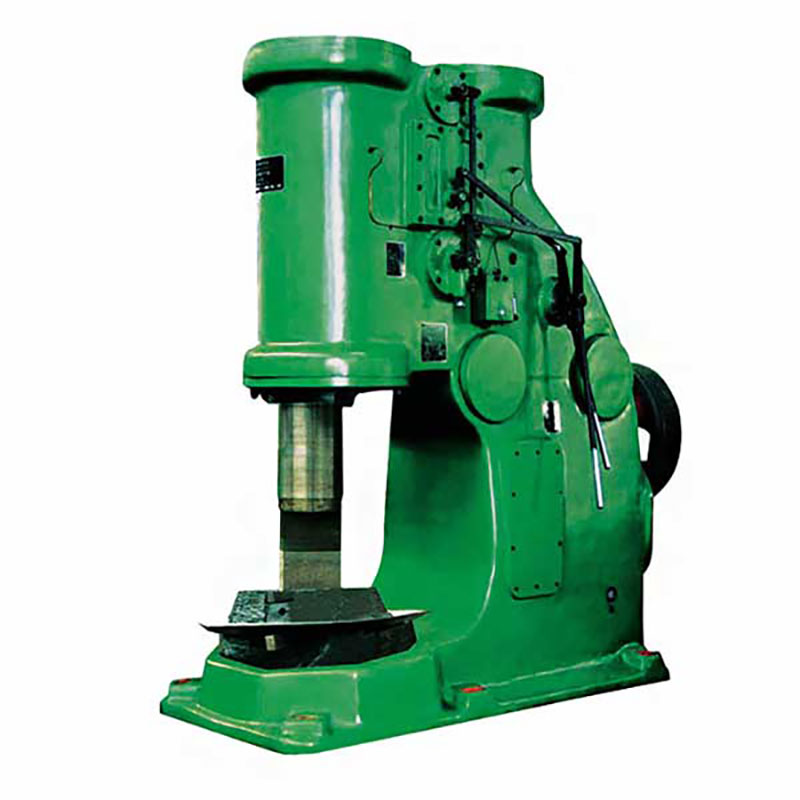
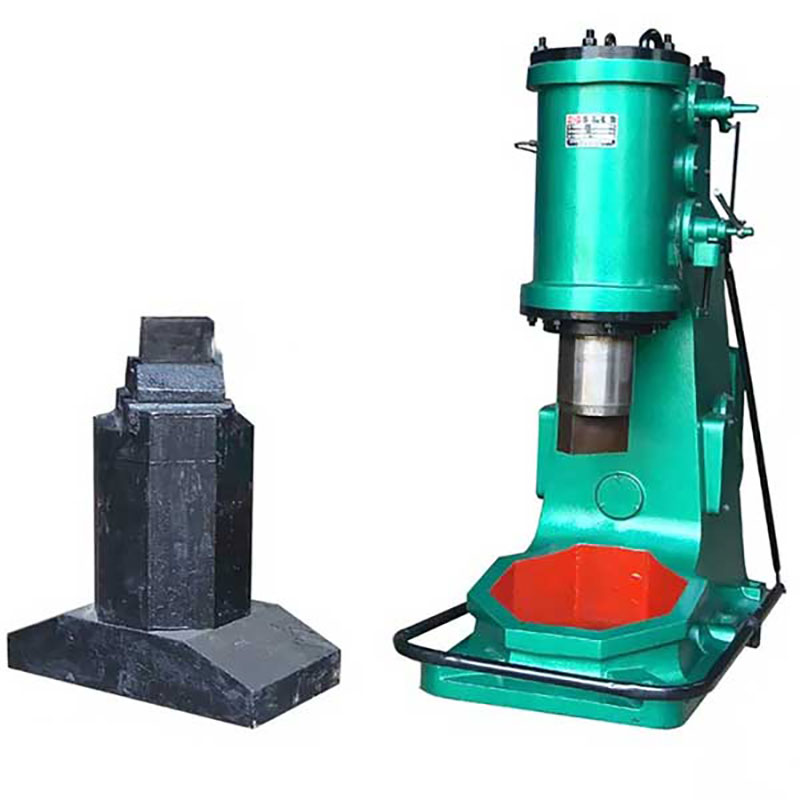
What is Hydraulic Forging Hammer?

Hydraulic forging hammer uses high-pressure hydraulic oil as its core transmission medium, combined with an accumulator energy storage system to drive the hammer head to complete high-speed impact forging. It is a core precision forging equipment in the high-end industrial forging field. With its core characteristics of precise and controllable impact energy, high forming accuracy, uniform forging density, and strong automation adaptability, it is widely used in high-precision forging scenarios such as precision machinery, aerospace, military, automotive parts, and high-end hardware.

Hydraulic forging hammers belong to the category of precision power forging hammers and are divided into two main series, fully hydraulic transmission and hydraulic-pneumatic hybrid transmission. Hydraulic forging hammers rely on a high-pressure hydraulic system to achieve rigid and controllable impact, with an impact energy utilization rate of over 90%, far exceeding the approximately 60% of pneumatic hammers. The equipment supports stepless adjustment of impact force, impact stroke, and impact frequency, and can adapt to both high-precision free forging and precision die forging processes. Hydraulic forging hammer equipment can meet the precision shaping needs of high-end small parts and also complete the batch forming processing of large and heavy forgings.

Pneumatic forging hammer for salein Guigong Machinery

C41-16kg Blacksmith Forging Hammer

C41-20kg Blacksmith Forging Hammer

C41-25kg Blacksmith Forging Hammer

C41-40kg Blacksmith Forging Hammer

C41-55kg Blacksmith Forging Hammer

C41-150kg Blacksmith Forging Hammer

C41-250kg Blacksmith Forging Hammer

C41-400kg Blacksmith Forging Hammer

C41-560kg Blacksmith Forging Hammer

C41-750kg Blacksmith Forging Hammer

C41-1000kg Blacksmith Forging Hammer

What Are Classifications of Hydraulic Forging Hammers?

Fully Hydraulic Forging Hammers

The upper and lower chambers are entirely driven by hydraulic oil, with no gas involved. This results in stable pressure, extremely high precision, good sealing, no pressure drift, and minimal impact energy error. Meanwhile, the accessories have a long service life and an extremely low failure rate, making them suitable for the production of high-precision, high-value-added precision forgings.

Hydraulic-Pneumatic Forging Hammer (Oil-Gas Hybrid)

Utilizing a hybrid mode of hydraulic oil supply and gas energy storage, it relies on the expansion of compressed gas to achieve impact. Its structure is relatively simple, its cost is lower, impact energy is large, cost-effectiveness is high, but its precision is slightly lower than that of fully hydraulic models. The type is suitable for batch forging of large-tonnage, conventional heavy forgings.

Single-Arm Hydraulic Forging Hammer

Open machine structure, spacious operating space, convenient workpiece loading and unloading, and high flexibility. Suitable for large free forging workpieces and irregularly shaped forgings, it has extremely high versatility and is suitable for flexible production of multiple varieties and small batches.

Arch-Type Hydraulic Forging Hammer

Double-column arched machine body, stronger rigidity, more uniform force distribution, less vibration, and structural stability superior to single-arm models. Suitable for medium-to-high precision die forging and free forging, it is a commonly used model in small and medium-sized precision forging workshops.

Clash-Type Hydraulic Forging Hammer

Features a bidirectional clash structure between the upper and lower hammer heads, canceling out impact forces. This results in minimal machine vibration, no ground impact load, and no need for a heavy foundation, maximizing energy utilization. Suitable for high-end precision die forging and mass production of high-precision aerospace and military parts.

Ordinary Manual Hydraulic Forging Hammer

Primarily controlled by a handle, with precise hydraulic system pressure adjustment. Simple, stable, and reliable operation. Suitable for routine precision forging in small and medium-sized factories, offering excellent cost-effectiveness.

Fully Automatic Hydraulic Forging Hammer

Equipped with a fully CNC PLC system, it allows for programmed forging parameters, automatic cyclic operation, and supports parameter storage, one-click recall, and data traceability. Adaptable to automated production lines and standardized mass production, it is a core piece of equipment in intelligent forging production lines.

Would Like the Latest Price?

Leave more about your requirements, like models, quantities, countries, etc.

What Are Main Applications of Hydraulic Forging Hammers?

  1. High-end precision free forging.Capable of precision drawing, upsetting, punching, and shaping of high-strength alloy steel, titanium alloys, stainless steel, and other special metals. Forgings have a dense internal structure, are free of porosity and cracks, and have high dimensional accuracy, meeting the performance requirements of high-end mechanical core components.
  2. Precision die forging mass production.With specialized precision dies, it mass-produces complex forgings such as gear blanks, connecting rods, turbine blades, precision flanges, and irregularly shaped structural parts. Product consistency is extremely high, tolerances are controllable, significantly reducing subsequent machining allowances and lowering production costs.
  3. Aerospace and military forging.Processing aerospace titanium alloy parts, high-strength military structural parts, and precision transmission components. The equipment offers stable striking power and produces forgings with uniform mechanical properties, meeting the stringent standards for strength, toughness, and precision required by high-end equipment.
  4. Automotive parts forging.Mass production of core automotive forgings such as crankshafts, connecting rods, transmission parts, chassis load-bearing components, and braking system parts. It meets the standardized, high-precision, and high-volume production needs of automotive parts.
  5. Heavy machinery blank forging.Large-tonnage hydraulic forging hammers can perform rough forging and finishing of large heavy industrial parts, mining machinery parts, wind power parts, and pressure vessel blanks.
  6. Special metals and new materials forging.Suitable for the plastic forming of difficult-to-machine metals such as titanium alloys, high-temperature alloys, and high-strength steel. It can precisely control forging force and deformation speed, avoiding cracking and performance degradation in special metal forging, making it a core piece of equipment for new material forging.
Would Like the Latest Price?

Leave more about your requirements, like models, quantities, countries, etc.

FAQs of Hydraulic Forging Hammer

1. What are the core differences between hydraulic forging hammers and pneumatic air hammers?

The core differences between hydraulic forging hammers and pneumatic air hammers lie in four dimensions: power medium, accuracy, energy efficiency, and application scenarios.

Pneumatic air hammers use compressed air as power, resulting in a simple structure, low cost, and convenient operation and maintenance. However, hydraulic forging hammers suffer from large pressure fluctuations, moderate precision, and low energy efficiency, making them suitable for basic forging scenarios such as ordinary hardware, agricultural implements, and conventional mechanical blanks. Hydraulic forging air hammers, powered by high-pressure hydraulic oil, are CNC-controlled, highly precise, energy-efficient, and powerful, suitable for precision die forging, special metal forging, and high-end parts production, supporting automated production lines.

2. What Are Working Principle of Hydraulic Forging Hammer?

The core working principle of a hydraulic forging hammer is hydraulic energy storage, differential pressure boosting transmission, and precise oil distribution for impact reset. It relies on a motor-driven oil pump unit for continuous pressurization, and an accumulator to store high-pressure potential energy. Through a precision hydraulic valve group controlling the oil circuit switching, it achieves high-speed downward impact and precise return reset of the hammer head. The entire process is closed-loop controllable, and the impact parameters are quantifiable, adjustable, and memorized, ensuring high-precision forging.

Currently, the industry mainstream uses two core principles: full hydraulic transmission and hydraulic-pneumatic hybrid transmission.

3. What are the advantages of fully hydraulic forging air hammer?

Full hydraulic type offers higher precision and stronger stability, making it the high-end mainstream model. Both modes can achieve various working conditions such as single-point light impact, heavy impact, continuous programmed impact, and suspended hammer pressure holding. The entire process features lossless hydraulic power, rapid impact response, and impact energy error controllable within 2%, completely avoiding forming deviations caused by air pressure fluctuations in pneumatic hammers, thus meeting the production needs of high-precision forgings.

4. How does fully hydraulic forging hammer work?

After the equipment starts, the motor drives the high-pressure oil pump to continuously output hydraulic oil, storing the high-pressure oil inside the accumulator to form a stable high-pressure power source. The lower chamber of the working cylinder piston is continuously connected to high-pressure oil, creating a constant support pressure. When the control system issues a forging command, the precision follow-up valve and impact valve quickly switch the upper chamber oil circuit, rapidly depressurizing the upper chamber and creating a significant pressure difference between the upper and lower chambers. This, combined with the hammer’s own weight, creates a differential pressure boosting effect, driving the hammer to descend rapidly and applying a high-intensity, highly uniform impact load to the high-temperature metal billet, completing precise plastic deformation. After forging, the oil circuit reverses, high-pressure oil is introduced into the upper chamber, while the lower chamber maintains pressure, synergistically propelling the hammer to a rapid and smooth return to its original position, entering standby mode.

5. How does a hydraulic-pneumatic forging hammer work?

The principle of a hydraulic-pneumatic forging hammer is slightly different. The rodless chamber of the working cylinder stores a fixed amount of compressed gas. When hydraulic oil enters the rod chamber, it compresses the gas, lifting the hammer to store energy. After the oil is released, the gas expands and, combined with its own weight, completes the impact.

6. Should you choose a fully hydraulic forging hammer or a hydropneumatic forging hammer?

Choose based on the applicable scenario. Fully hydraulic forging hammers utilize hydraulic oil transmission throughout the entire process, making them suitable for high-value-added, high-precision forgings in aerospace, military, and automotive precision parts production. They are the first choice for scenarios with stringent requirements for product consistency and yield. However, their equipment cost is relatively higher.

Hydropneumatic forging hammers use a hybrid oil-air energy storage system, offering excellent cost-effectiveness. However, their precision is slightly inferior to fully hydraulic models. They are suitable for large-scale mass production scenarios with moderate precision requirements and a focus on heavy-duty forging, such as heavy machinery, ordinary automotive parts, and large blanks.

7. Can hydraulic forging air hammers forge special hard metals such as titanium alloys and high-temperature alloys?

Hydraulic forging hammers are the optimal equipment for forging special hard metals such as titanium alloys, high-temperature alloys, and high-strength alloy steels. These special metals have high hardness, poor plasticity, and require stringent forging processes. Ordinary pneumatic hammers lack sufficient power and produce uneven impact, easily leading to problems such as workpiece cracking, loose internal structure, and forming defects. Hydraulic forging hammers possess high-pressure differential boosting characteristics, resulting in large striking force and controllable impact flexibility. By precisely adjusting the striking energy, stroke, and frequency, slow and uniform shaping can be achieved, gradually releasing internal stress in the metal and avoiding stress concentration cracking. Simultaneously, stable hydraulic power ensures a dense and uniform internal metallographic structure in the forging, perfectly meeting the forging process requirements of special metals. They are widely used in the precision forging of aerospace special components.

8. What are the energy-saving advantages of hydraulic forging hammers compare to pneumatic hammers?

Hydraulic forging hammers have significant overall energy-saving advantages, with comprehensive energy consumption 25%-35% lower than that of pneumatic air hammers under the same tonnage conditions.

Firstly, they have higher energy utilization. The hydraulic energy storage system releases energy on demand and performs work instantaneously. The energy utilization rate is over 85%, which is far exceeding the approximately 60% utilization rate of pneumatic hammers.

Secondly, its standby power consumption is extremely low. In standby mode, the hydraulic hammer only maintains stable system pressure, requiring no continuous power output.

Finally, it offers energy efficiency adaptability to various operating conditions. The hydraulic hammer precisely controls pressure and adjusts striking force as needed, avoiding high-energy-consuming dry-working and over-forging waste. Simultaneously, the equipment has a low failure rate and minimal wear, reducing hidden energy losses from downtime and rework of defective products, resulting in significant energy savings in long-term mass production.

9. What is the service life of a hydraulic forging hammer?

Under proper operation and regular maintenance, the hydraulic forging hammers sold by our company can last 15-20 years. The cast steel body and main structure are virtually durable, requiring only periodic replacement of easily worn parts such as seals and valve assemblies.

10. Is the hydraulic forging hammer noisy and vibrating?

Compared to pneumatic air hammers, hydraulic forging hammers have lower operating noise and less vibration. Under normal operating conditions, the noise level is controlled at 70-80 decibels. The noise level of the impact-type model can be as low as below 70 decibels, meeting industrial environmental protection standards.

Feel free to inquiry us here!

Scroll to top