
Oil Press Machine for Sale
Choosing an oil press machine involves more than comparing motor power or purchase prices. The equipment must match your raw material, processing method, production target and available utilities. A suitable machine, supported by correct seed preparation and operating procedures, helps establish a reliable oil production process.
Our company supplies screw oil press machines and hydraulic oil press machines for overseas equipment buyers. We focus on matching equipment requirements with practical export considerations, helping customers clarify the machine configuration, purchasing scope and delivery requirements before placing an order.
Start with your raw material, required daily input and destination power supply. We use these requirements to discuss the appropriate equipment type, configuration and export quotation. The aim is a purchase that fits your production process, with a clear record of what is included and what your site needs to provide.
Inquiry Our Best Price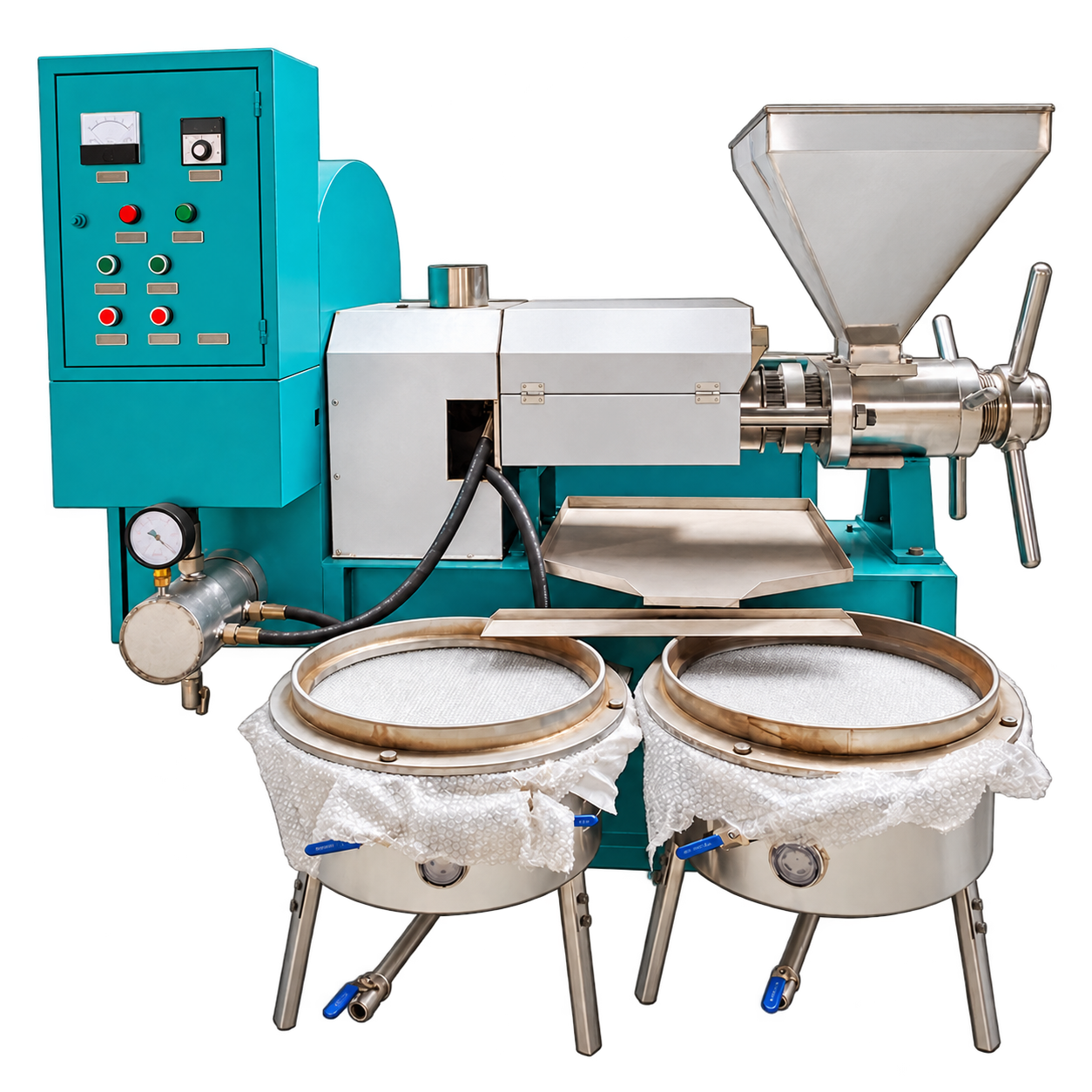
What Are Types of Oil Press Machine We Supply
Our product range includes two principal equipment types: screw oil presses and hydraulic oil presses. Their pressing mechanisms and operating cycles differ, so the best choice depends on your production requirements.
Screw Oil Press Machine
A horizontal screw oil press machine uses a rotating screw to convey and compress prepared oil-bearing material inside a pressing chamber. Oil passes through openings in the chamber, while the compressed material leaves as press cake.
This equipment is commonly called a screw oil press or oil expeller. Its continuous feeding and discharge arrangement makes it a relevant option for buyers planning sustained oilseed processing.
When evaluating a screw oil press, buyers should examine:
- Processing capacity for the intended raw material.
- Feed preparation and moisture requirements.
- Screw and pressing chamber configuration.
- Motor power and electrical supply.
- Cake discharge adjustment.
- Access for cleaning and replacement of wear parts.
- Oil collection and filtration arrangements.
Capacity should be assessed for the specific seed and operating conditions. A figure obtained with one material may not represent performance with another.
Hydraulic Oil Press Machine
A hydraulic oil press applies force to material loaded into a pressing chamber through a hydraulically driven pressing mechanism. Conventional hydraulic oil presses commonly operate in batches: loading, pressing, pressure release and cake removal.
For batch equipment, the weight loaded into the chamber is only part of the capacity calculation. The complete cycle time and the labor required between cycles also determine practical daily output. Commercial hydraulic oil press specifications commonly express capacity in kilograms per batch.
Important purchasing details include:
- Usable loading capacity per batch.
- Complete operating cycle time.
- Rated working pressure.
- Pressing chamber dimensions.
- Loading and cake removal procedures.
- Pressure control and safety arrangements.
- Cleaning access and material changeover requirements.
Hydraulic equipment should be selected using the intended material and process conditions rather than pressure alone.
Screw Oil Press vs Hydraulic Oil Press
Both machine types extract oil mechanically, but they organize production differently.
| Comparison | Screw Oil Press Machine | Conventional Hydraulic Oil Press Machine |
|---|---|---|
| Pressing mechanism | Compression by a rotating screw | Compression by a hydraulically driven mechanism |
| Operating pattern | Continuous feeding and discharge | Batch loading and pressing |
| Capacity assessment | Raw material processed per hour under stated conditions | Material per batch multiplied by complete cycles per hour |
| Important operating factors | Feed condition, screw configuration, speed and discharge setting | Loading method, pressure, pressing time and batch handling |
| Production planning | Requires consistent feeding and downstream handling | Requires coordination of loading, pressing and unloading |
| Maintenance focus | Screw, chamber, bearings, drive and other wear components | Hydraulic system, seals, controls and pressing components |
Neither design is automatically the best choice for every oilseed. Selection should consider material behavior, production rhythm, labor availability and required oil characteristics.
Match the Equipment to Your Feed Material
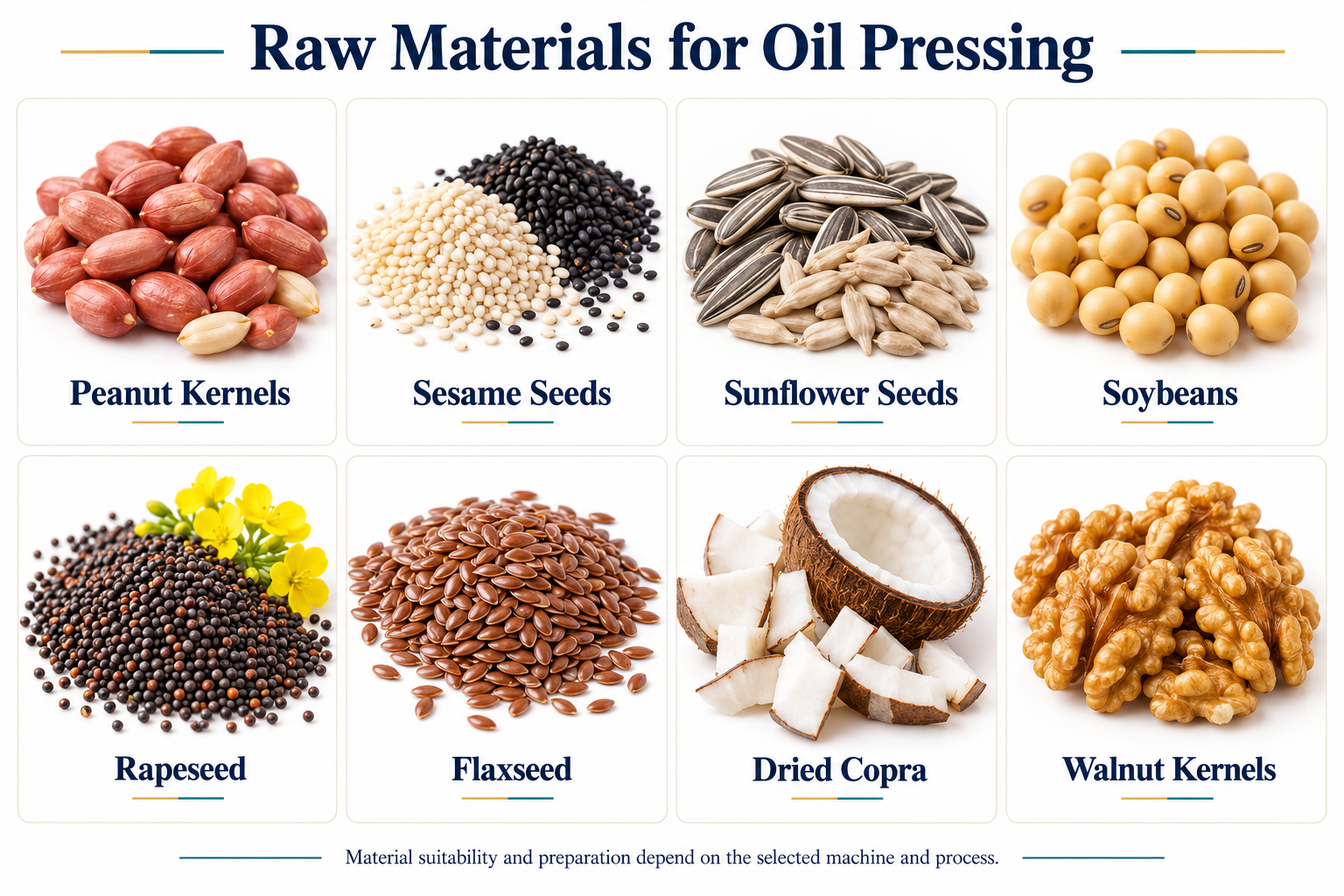
Tell us which seeds, nuts or kernels you intend to process and their condition at the machine inlet. Potential application discussions include sesame, peanut kernels, sunflower seed, rapeseed, soybean and dried copra, subject to confirmation for the selected equipment.
Material names alone are insufficient. Whole seeds, dehulled kernels, prepared pieces and roasted feed can present different processing requirements. Dried copra must also be distinguished from fresh coconut flesh.
When discussing your application, provide:
- The material and whether it is shelled, dehulled or otherwise prepared.
- Whether the feed is raw, heated or roasted.
- Available information on moisture and cleanliness.
- Whether one material or several materials will be processed.
- Your intended oil product and any temperature requirements.
Application suitability and performance should be confirmed for the actual feed. A broad application list is not a guarantee that one configuration will process every material equally well.
What Is the Cold Pressing and Hot Pressing of Oil Press Machine
Cold pressing and hot pressing describe processing conditions. They are not determined solely by whether the machine is a screw press or a hydraulic press.
Cold Pressing
Buyers interested in cold pressing should evaluate temperature throughout the process. Starting with unheated seed does not guarantee low oil temperatures because friction and compression can generate heat during pressing. Penn State’s guidance discusses how seed condition can affect press temperature during operation.
For a cold pressing project, clarify:
- The temperature limit required for the intended product or market.
- Where temperature will be measured.
- Feed preparation conditions.
- Expected throughput at the selected settings.
- Whether cooling or other temperature management is needed.
Hot Pressing
Hot pressing involves heating or conditioning the material as part of the process. It may support extraction for certain materials and can influence the flavor and other characteristics of the resulting oil.
The choice should reflect the seed, desired product and production economics. Claims about oil quality or extraction performance should be supported by suitable trials.
Information That Makes Equipment Selection More Accurate
Three details are especially useful at the beginning of a project.
Daily Feed Target
State how much raw material you need to process and the available working hours. Feed throughput and finished oil output are different measurements. Oil output depends on the feed and the agreed processing conditions.
Site Conditions
Provide voltage, frequency, phase, working space and access limitations. These details help establish whether the proposed equipment can be installed and operated at your site. Any electrical adaptation must be confirmed before ordering.
Required Product and Process
Explain the intended oil product, preparation method and temperature requirements. Cold pressing is a process condition, not an automatic property of either equipment type. Any temperature or extraction claim should be assessed under the proposed operating conditions.
Our Export Focus for International Oil Press Machine Buyers
Our company works as an oil press equipment supplier and exporter. We bring the production requirement and the international purchasing requirement into the same discussion, so customers can evaluate the machine together with the proposed delivery scope.
A Choice Between Two Pressing Technologies
Our screw and hydraulic equipment categories allow the enquiry to start with your application. You can discuss continuous and batch options without deciding on a pressing technology before the requirements have been reviewed.
Clear Configuration and Quotation Boundaries
Our quotation discussions identify the proposed equipment, power requirements and included accessories. Optional items and any requirements to be fulfilled locally should be distinguished. This gives purchasing staff and operators a common basis for reviewing the offer.
Destination Requirements Considered Early
Electrical standards, required documents and destination-specific requirements belong in the enquiry stage. Certification, inspection arrangements and any special documentation must be confirmed for the exact equipment and order rather than assumed from a general product description.
Packing and Delivery Planning
Machine dimensions, packed dimensions, shipment weight and delivery terms help buyers plan freight and unloading. The agreed packing and delivery arrangements should reflect the selected equipment and transport method. A clear responsibility split also helps customers budget for destination handling and local installation.
Parts and Support Defined in Writing
For overseas purchases, the spare parts package and support scope deserve attention before shipment. Operating documentation, warranty terms and any installation assistance should be recorded in the order. This lets customers understand the agreed service and prepare their own maintenance resources.
An Oil Press Is One Part of the Production Process
A typical project may involve:
- Raw material reception and cleaning.
- Drying, dehulling, cracking or other preparation where required.
- Heating or conditioning where required.
- Mechanical pressing.
- Oil settling or filtration.
- Further treatment where necessary.
- Storage and packaging.
The exact process depends on the material and final product requirements. Mechanical pressing does not automatically produce bottled oil ready for every market.
Clarify whether the purchase covers a standalone oil press, a press with filtration equipment, or a broader processing arrangement. Connecting equipment and controls should also be included in the scope discussion.
Frequently Asked Questions About Oil Press Machines
1. What is an oil press machine?
An oil press machine extracts oil from suitable oil-bearing material through mechanical pressure. Depending on the design, compression is produced by a rotating screw or a hydraulically driven mechanism. The process produces oil and a remaining solid cake, with performance influenced by material preparation and operating conditions.
2. Which oil press machine types do you supply?
Our product range includes horizontal screw oil press machines and hydraulic oil press machines. The appropriate type depends on your feed material, processing target and operating method. Model selection should follow a review of capacity requirements, power supply and the preparation steps available at your site.
3. Which is better: a screw oil press or a hydraulic oil press?
There is no universal answer. Screw presses commonly support continuous feeding and discharge, while conventional hydraulic presses operate in batches. Compare practical throughput, labor, material handling, cleaning and maintenance requirements. A trial using the intended material can help resolve important performance questions.
4. Can one oil press machine process several oilseeds?
Some models can handle several materials, but suitability must be checked individually. Different seeds may require different preparation, operating settings or equipment components. Tell the supplier every material you plan to process, how frequently you will change materials and whether cross-contact between products must be controlled.
5. Can the oil press machine for sale in your company produce cold-pressed oil?
Cold pressing capability must be evaluated for the actual material and operating conditions. Friction can increase temperature even without seed preheating. Confirm the temperature requirements for your product, the measurement method and the throughput achievable while maintaining those conditions.
6. Does processing capacity mean oil production capacity?
Usually, oilseed processing capacity refers to feed input, but quotation terminology should always be checked. Oil output is lower than feed input and varies with oil content, preparation and extraction performance. Hydraulic equipment may quote kilograms per batch, which also requires a complete cycle time for production planning.
7. Can I enquire before deciding between screw and hydraulic equipment?
Yes. You can begin with the material you intend to process, its prepared condition and your production target. Include available working hours and labor. These details help compare continuous and batch arrangements. The appropriate choice depends on the project, so the equipment type need not be predetermined in your enquiry.
8. Do you supply an oil press or a complete production line?
Our confirmed product categories are screw and hydraulic oil presses. If your project needs preparation, filtration or other supporting equipment, list those requirements separately. The available supply scope must be established in the quotation. Do not assume that a standalone press offer includes a complete processing or bottling line.
9. Can overseas oil press machine distributors get a good price?
Distributors are welcome to submit their intended applications and destination requirements. Identify expected end users, electrical specifications, documentation and spare parts needs. These details establish a useful discussion of the equipment offer. Any branding, territorial arrangement or special commercial service must be agreed separately rather than assumed from an enquiry.
10. Can I request a material trial before ordering?
You may request a trial, with feasibility, sample requirements and arrangements confirmed separately. A useful test defines the feed condition, measurement method and performance questions in advance. Where testing is available, representative material and documented conditions provide a clearer basis for assessment than an unrelated demonstration using a different seed.
11. Can spare parts be included with the oil press machine?
A spare parts package can be discussed for the selected model. Ask which items are recommended, what quantities are proposed and whether they are included or optional. The appropriate package depends on the equipment and operating plan. Record the agreed parts list so it can be checked when receiving the shipment.
12. How are warranty and technical support arrangements confirmed?
Review the written terms before order approval. They should describe coverage, exclusions, the reporting process and the agreed support method. Installation assistance or on-site service should only be expected when expressly included. Clear documentation helps both parties understand responsibilities if operating questions or component problems arise after delivery.
13. How do I start an oil press machine enquiry?
Send your material, daily feed target, working schedule, electrical supply and destination. State whether this is a new operation, a replacement or a distribution purchase. Add any required accessories and documentation. These details provide the starting point for an equipment recommendation and an export quotation matched to your project.
Request an Oil Press Machine Quotation
Looking for an oil press machine for sale for your next project?
Tell us what material you plan to process, your required daily capacity and your destination power supply. Our company supplies screw and hydraulic oil press machines for overseas buyers and welcomes enquiries based on specific production requirements.
Send your raw material, capacity target and destination country to discuss a suitable equipment configuration and export quotation.
Request a Specification & Quote