
Screw Oil Press Machine
The horizontal screw oil press machines for sale in our company are offered for buyers planning continuous mechanical extraction from suitable prepared oilseeds and kernels. The equipment combines material conveying, compression, oil drainage and cake discharge within a screw pressing arrangement.
We supply screw oil press equipment for overseas projects and discuss the configuration around your feed material, required throughput and existing process. Enquiries can address a new installation, replacement of an existing press or equipment sourcing for distribution.
For buyers planning regular production, the important question is not simply how much a machine can process at its highest advertised capacity. It is how reliably the selected press can operate with the material, labor and supporting equipment available at your site.
Send your prepared feed details and required operating capacity to request a screw oil press quotation.
Inquiry Our Best Price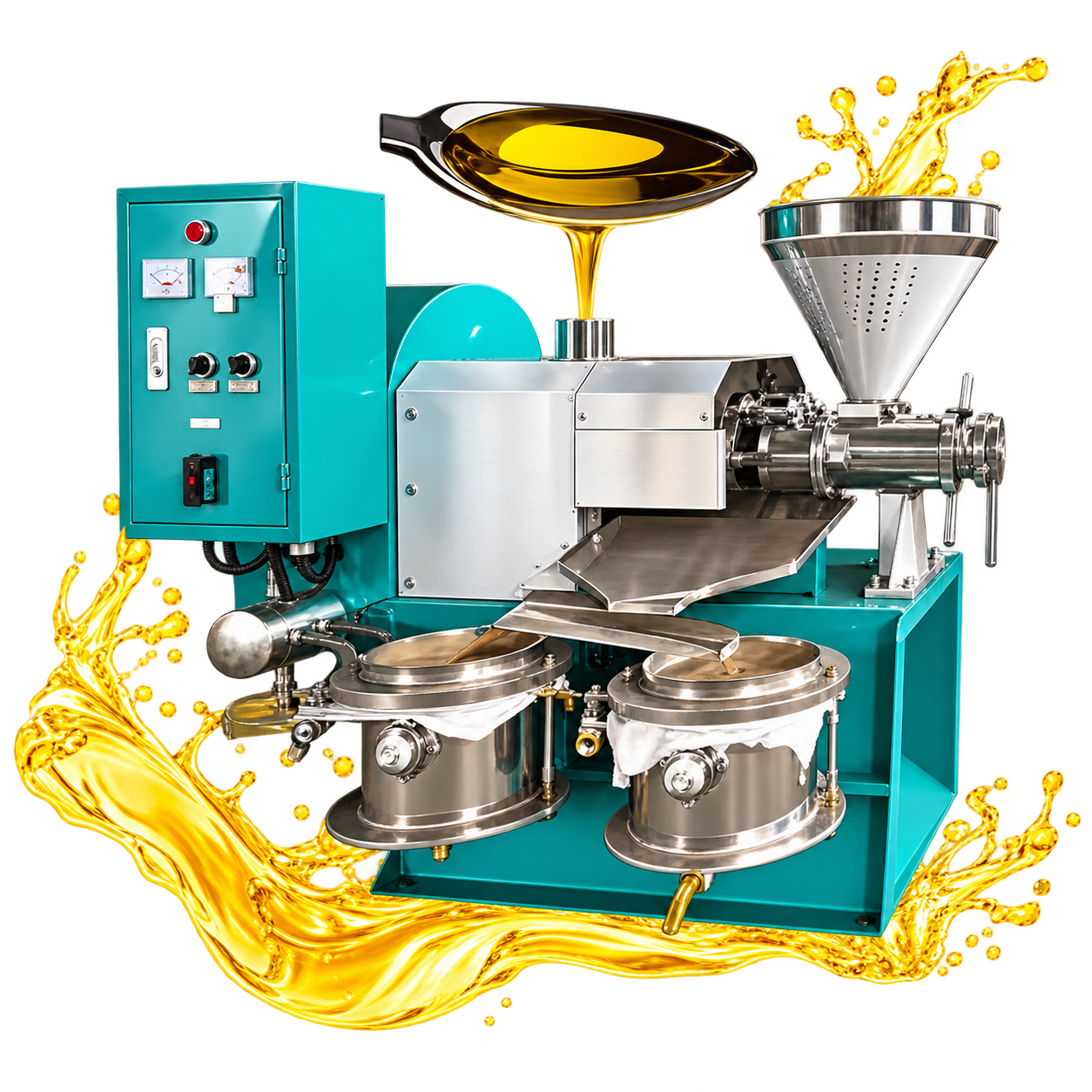
Screw Oil Press Machine Specifications
| Model | MX70 | MX80 | MX100 | MX125 | MX150 |
|---|---|---|---|---|---|
| Motor Power (kW) | 3 | 5.5 | 7.5 | 15 | 22 |
| Feed Capacity (kg/h) | 50–80 | 60–130 | 140–280 | 300–400 | 500–600 |
| Machine Weight (kg) | 280 | 780 | 1,100 | 1,280 | 2,000 |
| Overall Dimensions (L × W × H, mm) | 1,400 × 860 × 1,260 | 1,700 × 1,200 × 1,500 | 1,800 × 1,300 × 1,680 | 2,100 × 1,400 × 1,700 | 2,200 × 1,400 × 1,700 |
Specifications are based on the supplied product sheet. Feed capacity is not oil output and depends on the material, preparation and operating conditions. Confirm the final specifications and supplied configuration in the quotation.
How a Horizontal Screw Oil Press Works
Inside the press, a rotating screw moves material along the pressing chamber. The screw geometry and chamber arrangement progressively compress the feed, allowing released oil to pass through drainage openings. The remaining material exits as compressed cake.
The interaction between the feed material, screw, chamber and discharge resistance determines pressing behavior. These elements must work together: a powerful motor cannot compensate for unsuitable feed preparation or an incorrect operating configuration.
The main functional areas typically include:
- A feed inlet or hopper.
- A screw shaft and pressing chamber.
- Oil drainage and collection components.
- A cake discharge arrangement.
- A motor, transmission and supporting frame.
- Electrical controls appropriate to the selected model.
The actual configuration varies by machine. Heating, feeding assistance, filtration and other accessories should be identified separately in the quotation.
What Makes a Screw Oil Press Machine Suitable for Your Production
Continuous pressing is useful only when the complete material flow can support it. The selected press needs a consistent feed supply, sufficient oil collection capacity and a workable route for discharged cake.
For this reason, equipment selection should examine the material path through your operation, not just the motor rating. A press that fits the feed and handling arrangements can be more practical than a nominally larger machine that repeatedly waits for material or downstream clearance.
The main selection priorities are:
- Confirmed suitability for the intended prepared feed.
- Feed throughput stated for relevant operating conditions.
- An appropriate screw and pressing chamber configuration.
- Access to the components used in routine cleaning and maintenance.
- Compatibility with your power supply and supporting equipment.
Compare Screw Oil Press Configurations
When requesting model information, ask for specifications that describe the machine as it will be supplied.
| Configuration item | Information to establish | Relevance to your project |
|---|---|---|
| Feed capacity | Input rate with identified material and preparation conditions | Matches the press to your daily workload |
| Pressing assembly | Screw and chamber arrangement for the intended feed | Defines the application configuration |
| Drive system | Motor rating and transmission details | Supports utility and maintenance planning |
| Feeding arrangement | Inlet requirements and any proposed feeding accessories | Helps coordinate consistent material delivery |
| Temperature provisions | Heating or monitoring equipment, if included | Clarifies the process and supplied controls |
| Oil collection | Outlet arrangement and any separately quoted filtration | Defines downstream connections |
| Installation envelope | Dimensions, weight and required service access | Helps assess the proposed location |
| Wear parts | Compatible components and recommended initial spares | Supports replacement planning |
The appropriate model is established after the application review. Capacity, dimensions and component details should come from the offered machine specification rather than a generic product table.
Understand Screw Press Capacity Before Comparing Models
Capacity figures are useful only when their basis is clear.
For a screw oil press, throughput commonly refers to the weight of feed processed per hour. Buyers should confirm the material, preparation method and operating conditions used to establish that figure.
Three different figures should be distinguished:
- Feed throughput: the weight of material entering the machine.
- Collected oil output: the weight of oil recovered during pressing.
- Usable production output: the oil available after the agreed downstream process.
Our Export Focus for Screw Oil Press Buyers
Our company supplies screw oil press equipment for international purchasing projects. Our export approach centers on turning your processing requirements into a clearly defined order.
Application Details Before Model Selection
We begin with the intended material, feed condition, daily throughput and operating schedule. This provides a stronger basis for configuration discussions than selecting a model by motor power alone.
Clear Equipment Boundaries
The quotation should distinguish the press from optional feeders, preparation machines, filtration equipment and other accessories.
This helps buyers understand what is supplied and what must be provided locally.
Destination Requirements Included in the Discussion
Voltage, frequency, phase, required documents and any applicable market requirements should be raised before order confirmation.
Any electrical adaptation or certification must be confirmed for the exact equipment offered.
Shipment and Maintenance Preparation
Packing dimensions, shipment weight, unloading requirements and the agreed spare parts package help the buyer prepare for delivery.
Warranty, operating documentation and technical support arrangements should be recorded in the purchasing documents rather than assumed.
Feed Conditions to Confirm Before Selecting a Model
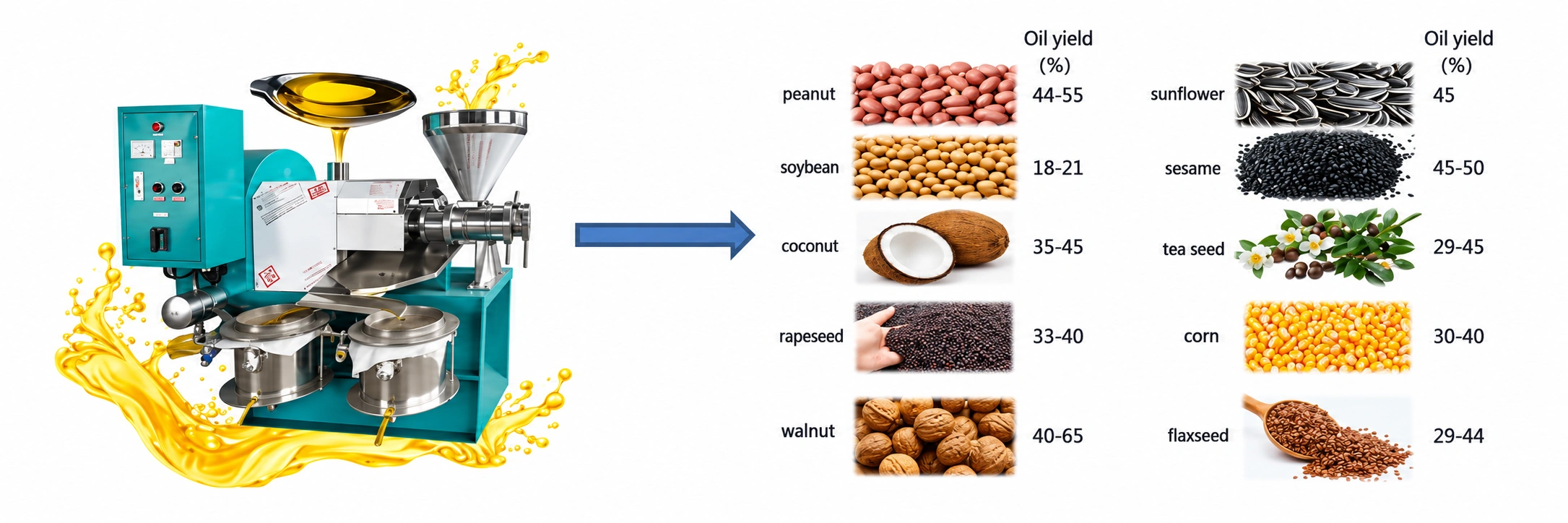
A screw oil press should be evaluated with the material that will actually enter its chamber. Possible application discussions include prepared peanut kernels, sunflower seed, rapeseed, sesame, soybean and dried copra, subject to model-specific suitability.
Tell us whether the feed is whole, dehulled, cracked, cut or otherwise prepared. Also state whether it will be raw, conditioned or roasted. These details help identify whether the proposed press fits the existing preparation process.
For projects involving several materials, provide the planned production sequence. A machine may need different settings or components for another feed, and cleaning access becomes especially important during frequent changeovers.
Request a Screw Oil Press Machine Price
Price depends on the offered pressing configuration, drive system, controls, accessories and shipment scope. To obtain a relevant quotation, provide your prepared material, required feed rate, intended operating hours, power supply and destination.
For broader equipment choices, visit our oil press machine product overview. This page focuses on the screw pressing option and the specifications needed to evaluate it.
FAQs
1. Is a horizontal screw oil press the same as an oil expeller machine?
In oilseed processing, an oil expeller commonly refers to a screw-type press. Horizontal describes the equipment arrangement. These names do not define a universal machine specification. Compare the actual screw assembly, feed suitability, drive arrangement and capacity conditions when assessing models offered under either description for your project.
2. Which raw materials can a screw oil press process?
Depending on the selected model and preparation method, screw presses may process materials such as peanut kernels, sunflower seeds, rapeseed, sesame, soybean or copra. Suitability must be confirmed individually. Different materials can require changes in preparation, operating settings or pressing components, so buyers should provide their complete intended material list.
3. How is screw oil press capacity normally stated?
Capacity commonly refers to the weight of prepared feed processed per hour under specified conditions. Ask which material and preparation were used to establish it. This figure differs from oil output. For a useful comparison, use equivalent feed conditions and check whether the quoted figure represents sustained operation or another basis.
4. Can I use the screw oil press machine throughout a full production shift?
Confirm the intended operating hours against the offered machine’s rated duty and maintenance requirements. Continuous feeding and discharge do not establish unlimited operation. Your setup also needs consistent prepared feed and sufficient oil and cake handling. Include cleaning, interruptions and changeovers when planning achievable daily production at your site.
5. Is a separate feeder necessary?
The answer depends on the press inlet, feed characteristics and production arrangement. Some installations may use approved manual loading, while others need coordinated feeding equipment. Describe how material will reach the press. Any proposed feeder should be matched to the application and clearly identified as included, optional or locally provided.
6. What preparation is required before screw pressing?
Preparation depends on the raw material and selected machine. It may include cleaning, drying, dehulling, cracking, cutting or controlled heating. The goal is to provide feed in a condition suitable for stable pressing. Buyers should confirm the required preparation steps and identify which supporting equipment is already available.
7. How does feed moisture affect a screw oil press?
Feed moisture influences material movement, compression, temperature and extraction performance. Material that is too wet or too dry may cause unstable operation or disappointing results. There is no universal moisture setting for every seed. Establish a suitable range through model-specific guidance and trials using representative production material.
8. Can a screw oil press produce cold-pressed oil?
A suitable screw press may be used in a cold pressing process, but the result depends on actual temperatures and operating conditions. Friction generates heat even when the feed is not preheated. Confirm your product’s temperature criteria, measurement points and achievable throughput before describing the finished oil as cold-pressed.
9. Can one screw press switch between different oilseeds?
Some machines can process several materials, but each application requires confirmation. Switching may involve cleaning, preparation changes, operating adjustments or replacement of certain components. Where allergen control or product separation matters, establish an appropriate cleaning and verification procedure. Changeover time should also be included in daily production planning.
10. Which screw oil press components may require replacement?
Depending on the design, wear items may include screw sections, pressing chamber components, seals and bearings. Replacement needs depend on feed characteristics, contamination, operating settings and maintenance. Request the model-specific parts list and recommended spare package. Component life should not be assumed identical across different materials or production schedules.
11. How should a screw oil press be cleaned?
Follow the cleaning procedure supplied for the exact machine. Isolate power and place the equipment in a safe condition before accessing components. Remove retained feed and oil residues using approved methods. Do not assume that flushing with another seed removes all previous material, particularly when cross-contact control is required.
12. Do I need a filter with a screw oil press?
Pressed oil may contain fine solids that require settling or filtration. Whether a separate filter is needed depends on the press configuration and intended product. Confirm whether filtration equipment is included or optional. Filtration removes suspended particles but does not replace every treatment needed for your final oil specification.
Discuss Your Continuous Pressing Requirements
Tell us what enters the press, how much you need to process and how the machine will connect to your production area.
Request a screw oil press machine specification and export quotation for your application.
Request a Specification & Quote