

Would Like the Latest Price?
Leave more about your requirements, like models, quantities, countries, etc.
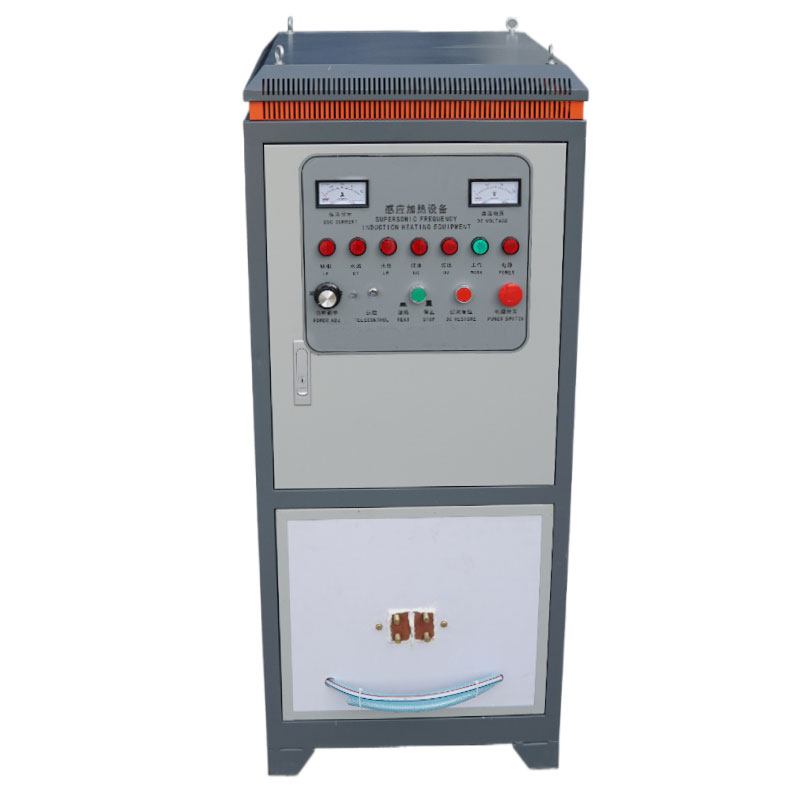
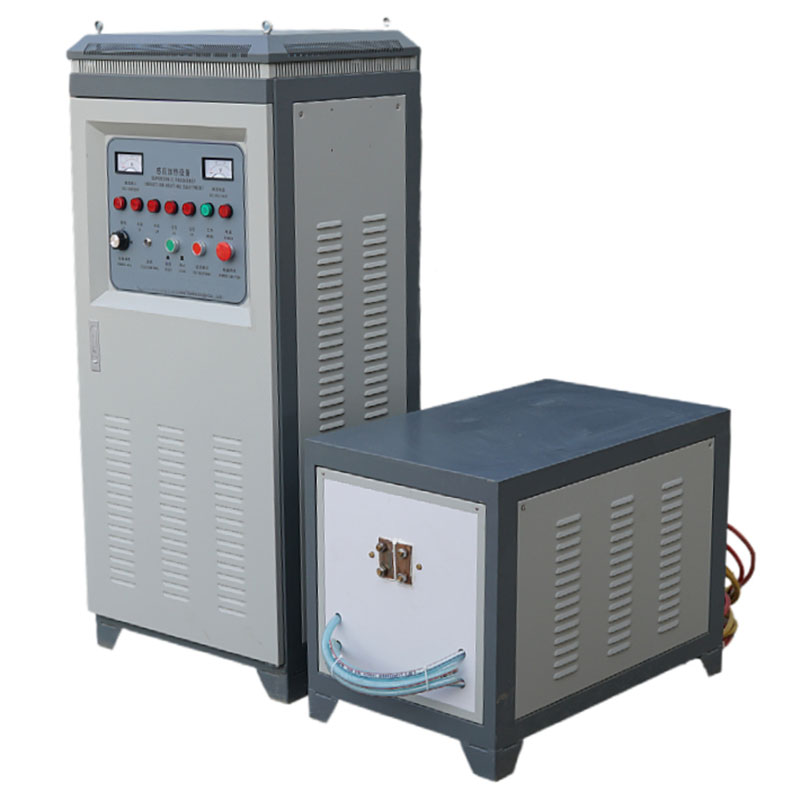
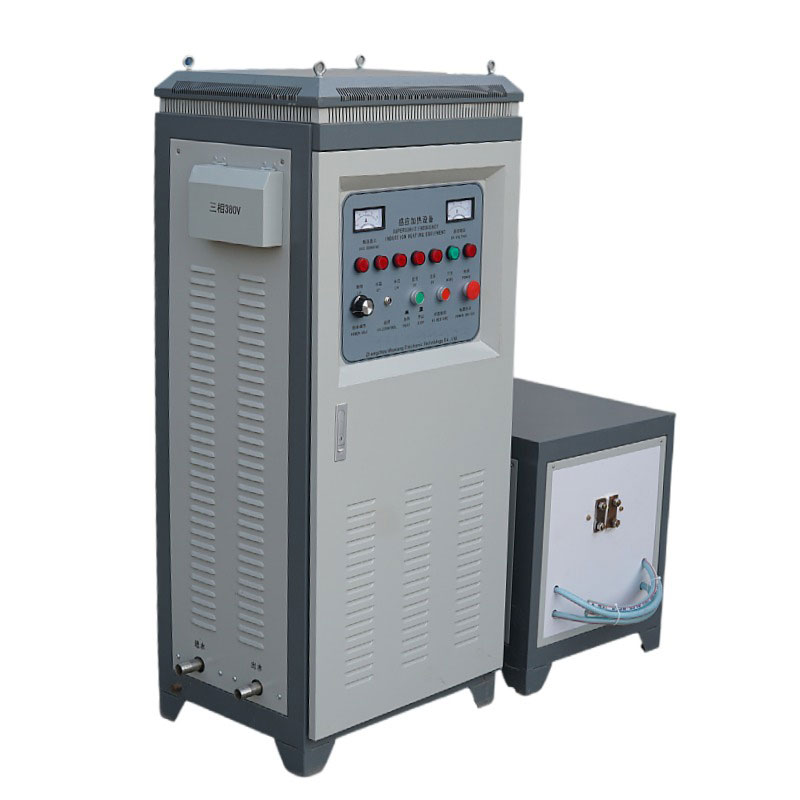
Induction heating equipment, also known as induction heater, is an intelligent industrial heating device developed based on the laws of electromagnetic induction and the Joule heating effect. Unlike traditional heating equipment that heats workpieces through heat source radiation or medium conduction, the induction heating equipment directly converts industrial frequency electrical energy into high-frequency, ultrasonic, and medium-frequency alternating magnetic field energy, causing eddy currents to generate heat within the metal workpiece, achieving precise heating without contact, medium, or open flame. Simply put, induction heater does not require burning coal, gas, or oil, nor does it require resistance wire heating. The equipment can quickly heat various conductive metals through the conversion of electrical energy into a magnetic field. It can precisely complete a full range of metal heat treatment processes, including quenching, annealing, tempering, brazing, hot assembly, metal smelting, preheating before forging, and stress relief. Induction heating machine is currently the most widely used, cost-effective, and environmentally friendly mainstream heating equipment in the industrial heat treatment industry.

The biggest advantages of medium-frequency equipment are its strong heating penetration, large heating depth, and wide power coverage. It is primarily used for the overall penetration heating of large, thick-walled metal workpieces, ensuring uniform temperature rise and eliminating surface overheating and internal stagnation. This equipment has a wide power range, suitable for preheating small workpieces, and can also meet the needs of heavy-duty applications such as large mechanical parts and non-ferrous metal smelting.
Core applications
Smelting of steel, copper, aluminum, gold, silver, and other non-ferrous metals.
Integral quenching of large shafts, gears, and bearings.
Preheating before forging heavy mechanical parts, heat treatment of thick-walled pipes, and hot forging of metals.
Widely applicable to metallurgical casting, heavy machinery, and large automotive parts industries.
Ultra-high frequency equipment is the most versatile and adaptable type of equipment in the industry. It balances heating depth and surface heating precision, offering excellent heating uniformity and perfectly adapting to shallow and medium-depth heat treatment processes. Its heating depth falls between medium and high frequency, satisfying surface quenching needs for small to medium-sized workpieces, and also suitable for conventional brazing, annealing, and heat fitting processes, covering almost all conventional machining and hardware processing conditions.
Core applications
Surface quenching of mechanical parts such as gears, sprockets, splined shafts, and pins.
Brazing of copper tubes, aluminum tubes, and stainless steel parts.
Heat fitting and disassembly of motor rotors and bearings.
Annealing and stress relief of hardware accessories.
High-frequency equipment focuses on shallow, high-precision, and small-area fine heating. Utilizing the high-frequency skin effect, it achieves precise heating, extremely rapid temperature rise, and minimal workpiece deformation, without causing thermal impact on non-processed areas. This equipment is compact, easy to operate, and has a rapid response, primarily suitable for machining small, precision, and thin-walled metal workpieces.
Core applications
Brazing of cutting tools, drill bits, and saw blades.
Surface hardening of precision small parts.
Welding of jewelry and small hardware parts.
Annealing and straightening of small metal parts.
Heating of injection molding machine barrels and heat treatment of precision electronic components.
Leave more about your requirements, like models, quantities, countries, etc.
Induction heating adopts an endogenous heating mode, eliminating heat loss through intermediate media. The equipment’s heat conversion efficiency can reach over 90%. Under the same processing conditions, induction heating equipment can save 30%-50% of energy. It requires no preheating or whole-furnace heating, providing on-demand, point-to-point heating with no wasted energy. Long-term use can significantly reduce enterprise electricity, consumable, and fuel costs, resulting in significant economic benefits.
The equipment heats up immediately upon power-on, and workpieces can complete heating and processing within seconds to tens of seconds. The processing cycle for a single workpiece is significantly shortened. Simultaneously, the concentrated heating process and rapid thermal response make it suitable for large-scale continuous production lines, effectively improving the overall production capacity of the workshop. Compared to traditional heating methods, production efficiency can be increased by 1-3 times, perfectly meeting the needs of large-scale industrial production.
The equipment can precisely control the heating temperature, heating depth, and heating area by adjusting the frequency, power, and heating time, easily achieving differentiated heating for localized, fixed-point, surface, and overall applications. Workpieces are heated evenly with minimal thermal deformation, resulting in high processing consistency and a high yield rate, fully meeting the precision processing requirements of precision mechanical parts and high-end hardware accessories.
Induction heating uses pure physical electrical energy conversion throughout the process, with no open flame, smoke, waste gas, waste residue, or noise pollution. It does not consume oxygen in the workshop and has no fuel combustion product emissions.
The equipment adopts a non-contact heating mode, with no direct contact between the induction coil and the workpiece, eliminating electrode wear, workpiece surface scratches, and impurity contamination. Simultaneously, the heating speed is fast, and the workpiece’s high-temperature residence time is short, effectively reducing problems such as metal oxidation, decarburization, deformation, and cracking.
This equipment is compatible with all conductive metal materials, including steel, iron, copper, aluminum, stainless steel, cemented carbide, and precious metals. Regardless of workpiece size, thickness, or irregular shape, it can be matched with corresponding equipment models and customized coils. It comprehensively covers various processes such as heat treatment, welding, smelting, preheating, and hot fitting, adapting to almost all metal processing industries.
The new generation of induction heating equipment supports parameter memory, one-button start or stop, remote control, and data statistics, and can seamlessly integrate with robotic arms, conveyor belts, and automated production lines. This equipment enables unmanned continuous production with automatic loading and unloading, automatic heating, and automatic unloading, significantly reducing labor costs, improving production standardization, and aligning with the trend of intelligent manufacturing.
The core components of the equipment are made of high-quality industrial-grade materials, which are wear-resistant, high-temperature resistant, and highly stable. There are no easily damaged consumable parts, eliminating the need for frequent consumable replacements. Equipped with a complete cooling system and protection modules, it can operate stably for a long time. Under normal operating conditions, the equipment’s service life can reach 8-10 years, requiring only simple cleaning and maintenance daily. Maintenance costs are far lower than traditional heating equipment.
Leave more about your requirements, like models, quantities, countries, etc.
Primarily used for surface quenching, tempering, annealing, and stress relief treatment of various gears, splined shafts, pins, sprockets, molds, screws, and bearings. Effectively improves the hardness, wear resistance, and fatigue resistance of parts, extends the service life of mechanical parts, and ensures the stability of equipment operation.
Widely used in the brazing and heat treatment of manual and electric hardware tools such as cutting tools, drill bits, taps, saw blades, wrenches, pliers, and hammers. The processing technology is stable, the finished product has high precision, a smooth appearance, no oxidation defects, and an extremely high product qualification rate.
Suitable for hot fitting and disassembly of motor rotors and stators, precision welding of copper and aluminum busbars, heat treatment of new energy battery components, processing of charging pile components, and annealing of transformer components. High processing precision, no workpiece damage, and compatible with high-end precision manufacturing standards in the new energy industry.
Can be used for rapid melting, purification, and casting of non-ferrous metals such as gold, silver, copper, aluminum, zinc, and tin. Also suitable for preheating of large castings and forgings before forging and heat treatment of thick-walled metals. Fast melting speed, uniform material, and no impurity contamination.
For quenching, hot fitting, and preheating of heavy workpieces such as automotive half-shafts, crankshafts, connecting rods, chassis components, brake discs, engineering machinery gears, and mining machinery parts. Strong process stability, meeting the high strength performance requirements of heavy industrial parts.
Used for annealing, welding, and precision heating of precision metal terminals, instrument components, and miniature hardware parts. Precise heating zone ensures no damage to surrounding precision components, making it suitable for cleanroom and high-precision production environments.
Suitable for end annealing, bending preheating, weld heat treatment, and hot expansion forming of steel, copper, and aluminum pipes. Uniform heating effectively prevents cracking and deformation during pipe processing.
Leave more about your requirements, like models, quantities, countries, etc.
No. Induction heating equipment relies on the electromagnetic eddy current effect for heating, and is only effective on conductive metals such as steel, iron, copper, and aluminum. Non-metallic materials such as plastics, wood, ceramics, glass, and rubber do not have conductive properties and cannot generate eddy currents, therefore they cannot be heated by induction heating equipment.
Induction heating equipment is far more energy-efficient than resistance furnaces, with a significant energy-saving advantage. Resistance furnaces rely on resistance wire radiation for heat transfer, resulting in high heat loss, long preheating time, and high ineffective energy consumption, with a thermal efficiency of only about 50%. Induction heating equipment generates heat internally, with no medium loss, and its thermal efficiency can reach over 90%.
Under normal operating conditions, overall energy savings of 30%-50% can be achieved, significantly reducing electricity costs over long-term use.
Under normal and standardized operation, the probability of workpiece oxidation and deformation is extremely low. Induction heating heats up extremely quickly, and the high-temperature residence time of the workpiece is short, greatly reducing the oxidation reaction time. Simultaneously, the heating area is precisely controllable, and non-processing areas are not heated. Compared to traditional equipment with long-term overall heating, it can minimize workpiece oxidation, decarburization, and thermal deformation problems, improving the quality of finished products.
The core selection depends on the heating process and workpiece specifications. High-frequency equipment is suitable for shallow welding, quenching, and annealing of small precision workpieces. Ultra-high-frequency equipment has the strongest versatility, suitable for surface heat treatment, brazing, and hot fitting of small and medium-sized parts. Medium-frequency equipment has a large heating depth, suitable for melting large workpieces, preheating before forging, and overall quenching of thick parts; precise matching based on needs is sufficient.
Industrial high-power medium-frequency, ultrasonic, and split-type high-frequency equipment must use a closed-loop purified water circulation cooling system. Small, integrated high-frequency equipment with air cooling does not require water. Using purified water effectively prevents scale buildup in pipes and coils, preventing problems such as reduced power output, over-temperature alarms, and shortened lifespan due to poor heat dissipation.
Industrial-grade inducter supports 24-hour continuous operation, suitable for mass production lines. The equipment is equipped with a comprehensive cooling system and multiple protection modules, ensuring stable heat dissipation and comprehensive protection. As long as the water and electricity supply is normal and regular maintenance is performed, it can operate continuously and stably for a long time without frequent downtime.
It can be precisely adjusted. The heating depth is mainly determined by the equipment’s operating frequency, output power, and heating time. The lower the frequency, the higher the power, and the longer the heating time, the greater the heating penetration depth. Operators can fine-tune parameters according to process requirements and, with customized coils, precisely achieve differentiated heating effects for shallow, medium, and deep layers.
Yes. Copper and aluminum are excellent conductive metals, perfectly suited for induction heating processing. The equipment can efficiently complete processes such as brazing, annealing, heat fitting, preheating, and melting of copper and aluminum parts. Due to the high thermal conductivity and low magnetic permeability of copper and aluminum, the equipment power can be appropriately increased during processing, matching specific process parameters to ensure uniform and stable heating effects.
Yes, this is one of the core advantages of induction heating equipment. By customizing a special-shaped induction coil, it can precisely fit the workpiece to be heated area. Combined with precise power and frequency adjustment, it can achieve localized, targeted, end-face, and gap-like heating of specific areas of the workpiece. There is almost no temperature rise in non-processed areas, perfectly adapting to the needs of precision machining.
Normal low temperatures will not affect the core operation of the equipment, and normal production operations can continue. However, in winter, low temperatures can easily cause water-cooled equipment pipes to freeze. After shutdown, any residual water in the pipelines must be drained promptly to prevent freezing and cracking. Additionally, in low-temperature environments, equipment can be briefly preheated under no-load conditions after startup to ensure more stable operation.