
BLACKSMITH WORKSHOP • EQUIPMENT SELECTION
How to Choose the Right Blacksmith Power Hammer for Your Forging Workshop
Choosing a blacksmith power hammer starts with understanding the work your workshop needs to perform. The right machine should handle your regular stock sizes, provide controllable blows, fit your installation conditions, and remain practical to maintain.
A hammer that is too small may slow down demanding jobs. A machine selected mainly for its size may require more space, installation work, and investment than your workshop can justify.
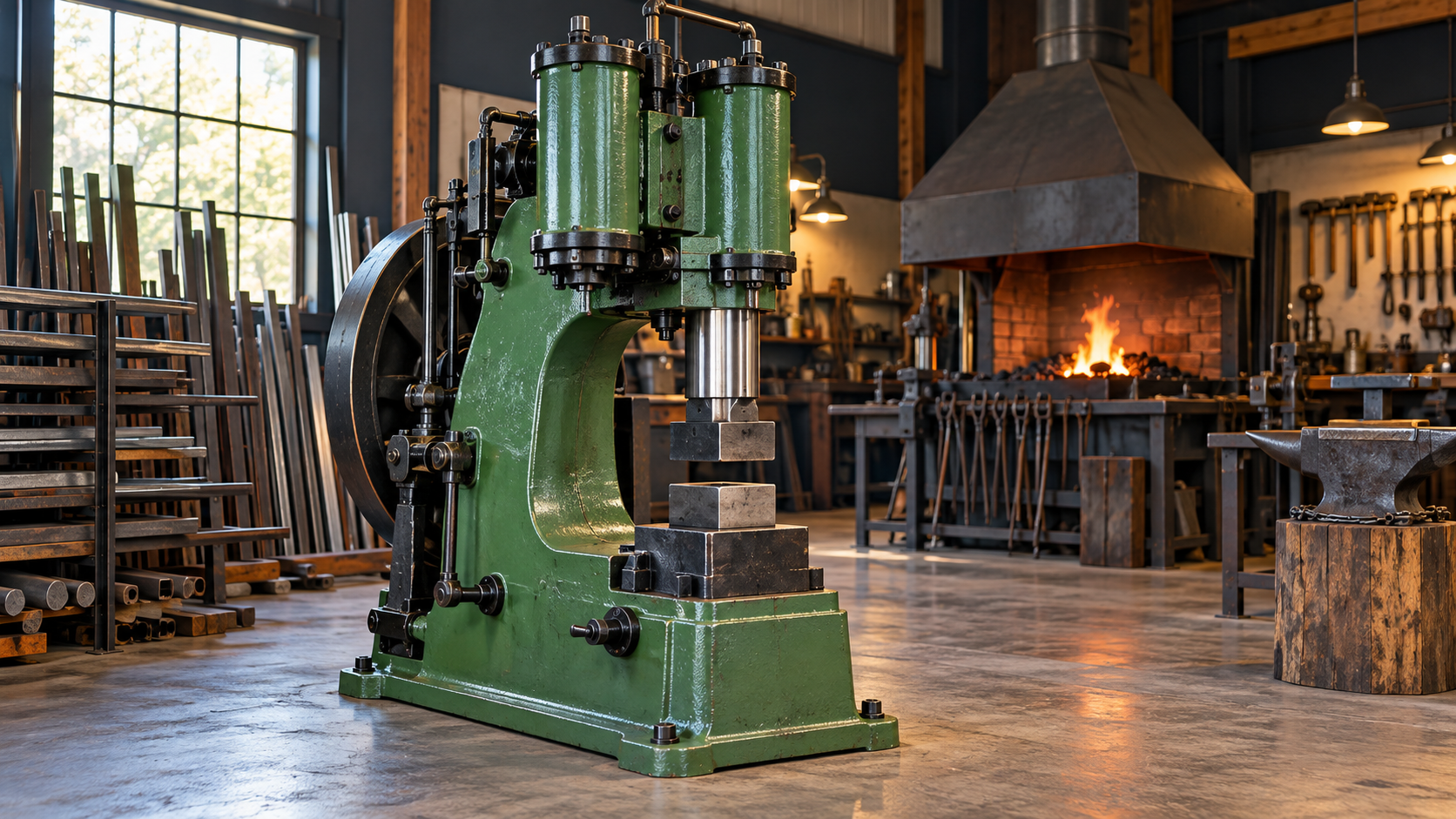
Define Your Main Forging Applications
Before comparing machines, write down the products you make most often and the operations involved.
A knife-making workshop may prioritize controlled drawing and shaping. An architectural blacksmith may need room to handle long bars and irregular components. A workshop producing tools or heavier forgings may place more emphasis on moving larger sections efficiently.
Typical applications include:
- Drawing out bars and billets.
- Shaping knife blanks and hand tools.
- Forming decorative ironwork.
- Upsetting selected sections.
- Working with suitable fullering or forming tools.
- Forge welding, where the material, tooling, and process are appropriate.
Separate your regular production work from occasional projects. Choosing around an unusually large job can leave you with a machine that is unnecessarily costly for everyday use.
Understand the Different Power Hammer Types
Self-Contained Pneumatic Power Hammers
A self-contained pneumatic hammer generates its working air internally. For example, Some manufacturers describe C41 design as using a motor-driven compressor piston to supply air to the ram cylinder, without an external compressed-air supply. When considering this type, check its motor requirements, lubrication system, controls, and maintenance access.
Externally Supplied Pneumatic Hammers
An externally supplied air hammer depends on a separate compressed-air system. Ask the supplier to specify the required operating pressure and air consumption under the intended working conditions.
The hammer and compressor should be evaluated together. Include the compressor, air treatment, piping, electrical requirements, and maintenance in your purchase comparison.
Choose Ram Weight in Relation to Your Workpieces
Ram weight is one of the first specifications buyers encounter. It describes the moving striking assembly rather than the total weight of the machine.
A heavier ram may be relevant for demanding work, but ram weight alone does not establish a hammer’s practical forging capability. Manufacturers also identify ram velocity and pneumatic force as factors affecting the blow.
When you need to choose a suitable models for your workshop, give the supplier the following information:
| Information | Why It Matters |
|---|---|
| Material grade | Different materials require different forging conditions |
| Starting stock dimensions | Establishes the section the machine must work |
| Required operations | Drawing, upsetting, and shaping place different demands on the equipment |
| Finished dimensions | Helps assess the amount of deformation required |
| Production quantity | Distinguishes occasional use from repeated production |
| Tooling requirements | Determines whether suitable dies and tools are available |
Request a demonstration using stock comparable to your own. A video showing only thin, easily worked material provides limited evidence for a workshop handling substantially larger billets.
Compare More Than the Model Number
Model names are useful for identifying equipment, but they should not replace a technical specification sheet.
Ask each supplier to provide consistent information so you can compare machines fairly.
| Specification | What to Check |
|---|---|
| Ram weight | Whether it includes dies or other attached components |
| Rated blow energy, if provided | Units and the conditions used to establish the rating |
| Blow rate | Whether the figure is a rated maximum or a typical operating value |
| Working clearance | Available space with the supplied dies installed |
| Throat depth | Access for your workpiece shapes and lengths |
| Die dimensions | Suitability for your regular stock and intended tooling |
| Motor rating | Compatibility with the workshop’s electrical supply |
| Overall dimensions | Installation space and delivery access |
| Total machine weight | Handling, transport, and foundation planning |
| Air requirements | Whether an external compressor is required |
Evaluate Blow Control and Operator Comfort
A power hammer must provide useful control as well as sufficient capacity. During a demonstration, look at how the machine starts striking, responds to its controls, and transitions between light and heavier work. Ask the operator to perform both rough shaping and a more delicate finishing operation.
Check whether:
- The operating control is comfortable to reach.
- The operator can hold the workpiece in a stable position.
- The working area remains visible.
- Tongs and tooling have adequate clearance.
- Repeated positioning is practical.
- The machine responds predictably during the demonstrated operations.
A demonstration should reflect the work you intend to perform. An impressive heavy-forging video does not necessarily show whether the machine suits detailed blacksmithing.
Check Working Clearance, Throat Depth, and Dies
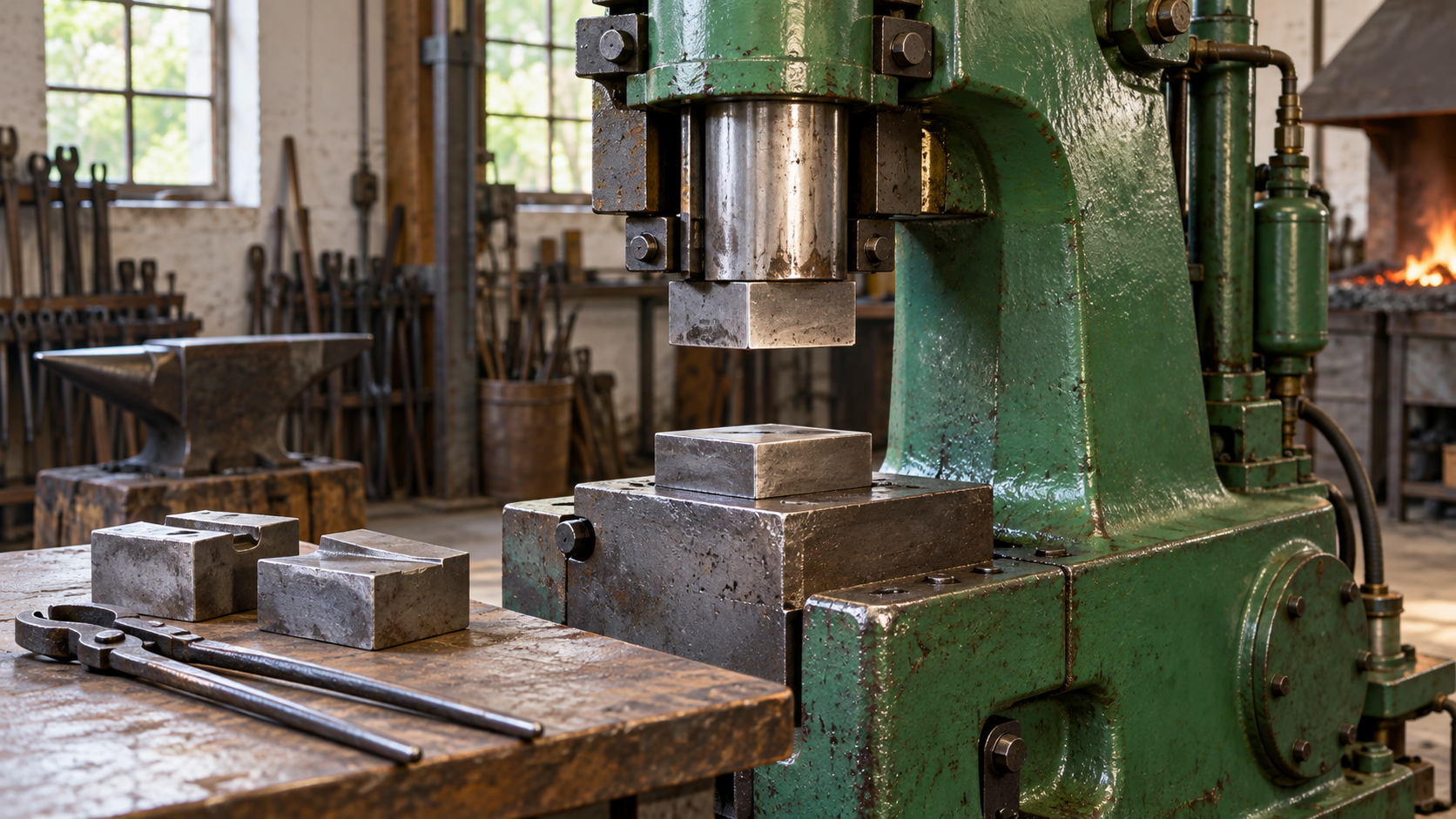
A hammer may have suitable striking capability but still restrict your work because of its geometry.
Working clearance determines the space available between the dies. Confirm how the supplier measures it and whether the quoted figure includes the standard tooling.
Throat depth affects access around the workpiece. This is especially relevant when handling long bars, bent components, or shapes that need to extend into the machine.
Also examine the supplied dies. Ask about their:
- Dimensions and profiles.
- Material and maintenance instructions.
- Attachment method.
- Replacement availability.
- Compatibility with optional tooling.
Confirm Electrical and Air-Supply Requirements
Electrical compatibility should be settled before the machine is shipped. Provide the supplier with your workshop’s voltage, frequency, and available phase configuration. Request confirmation of the motor and control-system configuration, together with the installation documentation. Ask a qualified electrician to assess the required supply, protection, isolation, and connection arrangements.
For externally supplied pneumatic equipment, obtain the air requirements in writing. Pressure alone is insufficient information. The supplier should also state the necessary airflow and explain the conditions under which it is required. For a self-contained pneumatic hammer, confirm that the quoted configuration actually generates its working air internally.
Plan the Foundation and Workshop Layout
Installation requirements vary by machine and site. Obtain the model-specific foundation and anchoring drawings before preparing the workshop. Have the existing floor and proposed installation assessed where necessary, particularly if the machine will stand on an existing slab whose construction is uncertain.
Your layout should account for:
- Access for delivery and lifting equipment.
- Space for long stock and workpiece rotation.
- The operator’s working position.
- Safe movement between the forge and hammer.
- Maintenance access.
- Nearby equipment and workstations.
- Noise and vibration implications.
A compact footprint does not mean the machine can operate comfortably in a tight corner. Allow room for the material and the people handling it.
Review Maintenance and Spare Parts Support
Maintenance support affects how practical a power hammer will be throughout its service life. Before purchasing, request the operating manual, maintenance schedule, lubrication instructions, and spare parts information.
For imported equipment, confirm how the supplier identifies replacement parts. A parts diagram with clear reference numbers can make future ordering easier. Written warranty terms should explain coverage, exclusions, and the procedure for obtaining support.
Compare the Total Installed Cost
The purchase price is only one part of the investment. Build a comparison that includes the costs necessary to put each machine into service:
| Cost Category | Items to Include |
|---|---|
| Equipment | Hammer, standard dies, and included accessories |
| Transport | Packing, shipping, and local delivery |
| Import costs | Applicable duties, taxes, and clearance charges |
| Installation | Lifting, foundation work, and anchoring |
| Utilities | Electrical work and any compressed-air equipment |
| Tooling | Additional dies and approved accessories |
| Commissioning | Setup assistance and operator training |
| Ongoing support | Consumables, spare parts, and maintenance |
Check exactly what each quotation includes. A lower equipment price may come with additional costs for tooling, installation, or commissioning.
Make the Final Selection Around Your Regular Work
The right blacksmith power hammer is the model that fits your production requirements and can be installed, operated, and maintained effectively in your workshop.
Use this final checklist before ordering:
- Your regular material and stock sizes have been reviewed.
- The proposed model has demonstrated relevant forging work.
- Working clearance, throat depth, and dies suit your products.
- Electrical and air requirements are confirmed.
- Foundation and delivery arrangements are feasible.
- Manuals, spare parts, and support are available.
- The quotation covers the complete agreed configuration.
Allow for realistic growth, but avoid paying for capacity you have no clear plan to use. When requesting a recommendation, send the supplier your material grades, stock dimensions, main forging operations, production needs, and workshop power supply. These details provide a stronger basis for selection than choosing by price or ram weight alone.
FAQs
1. What Size Power Hammer Is Best for a Small Blacksmith Workshop?
There is no single size that suits every small workshop. The selection depends on stock dimensions, materials, operations, and production frequency. Compare suitable models using representative workpieces, then check whether their installation and operating requirements fit your available space.
2. Is a Heavier Power Hammer Always a Better Choice?
A heavier model may suit larger or more demanding work, but it also needs to fit your installation, budget, and operating requirements. Useful control, suitable tooling, and workpiece access remain important. Choose the machine around the jobs you regularly perform.
3. What Information Should I Send When Requesting a Quotation?
Provide your material grades, starting stock dimensions, main products, forging operations, and expected production quantity. Include your electrical supply and installation location. Request a quotation listing the machine configuration, tooling, documentation, delivery scope, warranty, and support arrangements.
4. What Is the Difference Between Ram Weight and Total Machine Weight?
Ram weight refers to the moving striking assembly, while total machine weight refers to the complete hammer. Ram weight is relevant to striking performance, but total machine weight is important for transport, lifting, and installation planning. Ask the supplier to clarify whether the quoted weights include dies, the base, and accessories.
5. How Can I Check Whether the Dies Are Suitable for My Work?
Compare the die dimensions and profiles with your starting stock and intended forging operations. Ask the supplier to demonstrate the proposed tooling on representative workpieces. Also confirm the attachment method, replacement availability, and compatibility with optional dies before purchasing the hammer.
6. What Should I Check Before Importing a Blacksmith Power Hammer?
Confirm the machine specifications, electrical configuration, packing dimensions, shipping weight, and delivery terms. Obtain installation drawings and operating documentation before shipment. Your quotation should also identify included tooling, warranty terms, spare parts support, and responsibility for transport, customs clearance, and unloading.
7. How Can I Compare Quotations from Different Power Hammer Suppliers?
Give each supplier the same workpiece information and request an itemized quotation. Compare the machine configuration, tooling, utilities, installation requirements, delivery scope, and support. Evaluate the total installed cost alongside a relevant forging demonstration, rather than comparing only the listed machine price.